


“Do whatever brings you to life, then. Follow your own fascinations, obsessions, and compulsions. Trust them. Create whatever causes a revolution in your heart.”
Elizabeth Gilbert, Big Magic
When we left our house in Miami in July 2025, all we knew was that we were going to Alaska. There was something comforting—and liberating—about focusing on one singular, albeit long, journey. The future beyond that was unclear.
We had left our respective businesses, rented out our home, and were ready for a new chapter.
We had no idea what it would look like—but we had an inkling that, by departing on this journey, we would blaze a beautiful, new trail to somewhere. And in doing so, forge a family timeline that might one day make sense when looking back from the future.
We leaned into our family’s curiosity about threatened wildlife and took our kids on an open-ended trip to find and document 73 rare species in the wild. How long would the trip last? Where would we go? What would we do after that? Would we ultimately settle down? And if so, where?
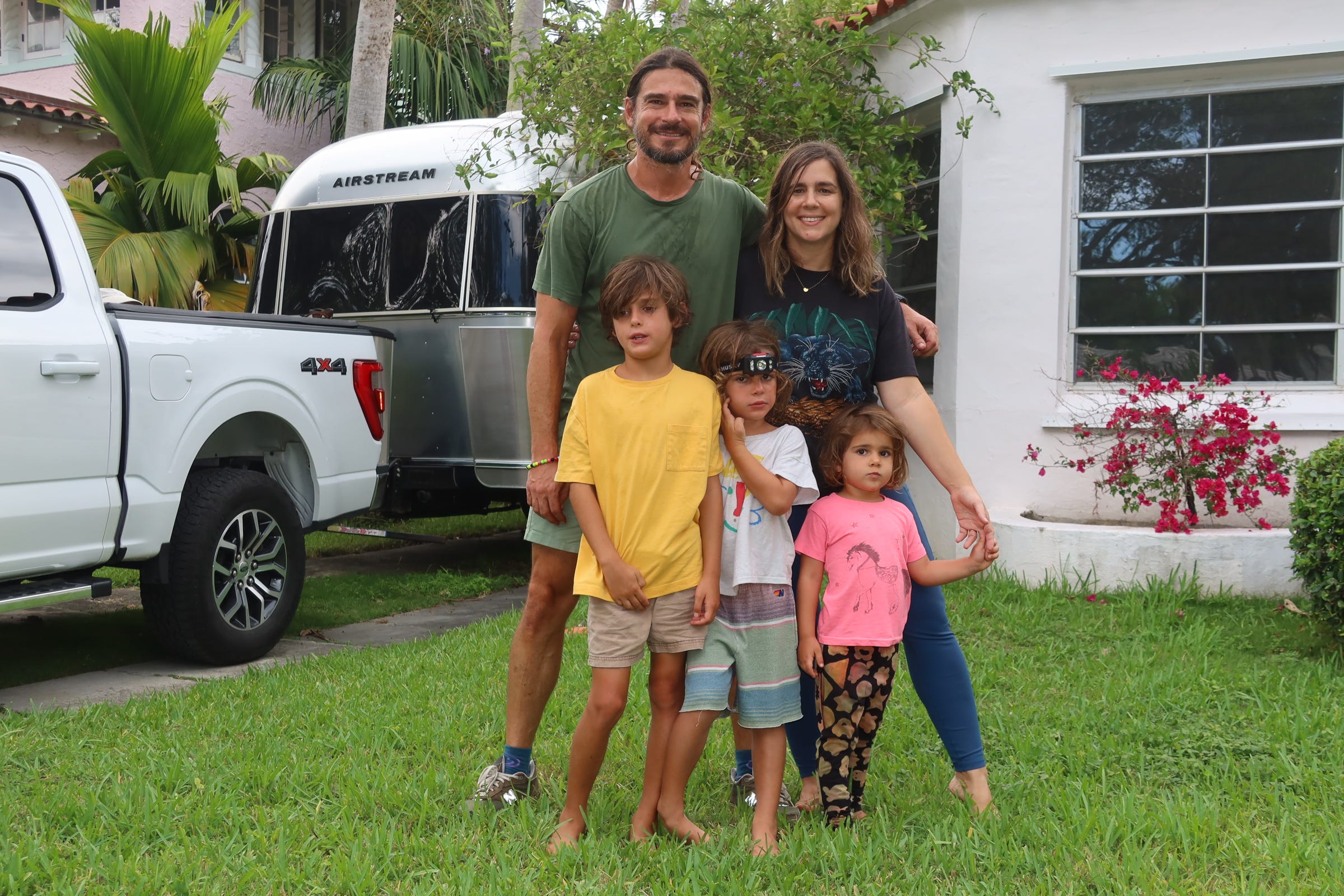
Just before taking this frightening leap into the unknown, with all these questions looming, we were often paralyzed by fear. We were not only battling internal doubts but also the very direct pressure from family and friends who couldn’t understand how we could choose to take this unusual, uncertain path. It was very difficult not to bow to these pressures.
We overcame the doubts by focusing on the new vision: a wide-open, expansive life on the road with our family. We conjured up feelings of warmth, intimacy, and togetherness in our Airstream home, peacefully surrounded by wilderness. After years of living the crowded, traffic-filled city life in Miami, deep rest and bonding in nature are what we most craved. The freedom and vastness of the open road and unbridled time together, focusing on what matters most to us, each other, was what called to us. We named our vision Earth Parade and started this small community, a space on the internet for us to write our truth and share our learnings with our friends and family.
Thirty minutes or so after leaving Miami, when the city’s congestion loosened and the buildings shrank, we felt all our anxieties and worries begin to wash away. We were now on the road we had once imagined. It was suddenly real. Our future narrative was no longer speculative. It had, in fact, begun.
We expected to connect with nature on this trip—and we did. The time we spent walking in the wilderness as a family felt like a universal blessing we will always cherish. We also had no choice but to stay physically fit because we were on our feet from sunrise to midnight, cooking, cleaning, and (insert gerund here). We were constantly intellectually stimulated. The kids took online math and reading classes. (Thank you, Outschool and Starlink!) The rest of the time, we soaked up geography, geology, and biology lessons as we sought to understand the natural systems around us.
But here’s the one thing that truly caught us off guard. It was shockingly difficult to keep the kids and ourselves well-nourished while on the go. With daily drives of 3-4 hours, we didn’t have time to cut fresh fruits and veggies every day. We often found ourselves in “food deserts” where fresh produce markets were few and far between. We traversed huge stretches of the United States and Canada, and we have never felt so disconnected from local food systems. Across literally hundreds of markets we shopped in over many months, we found it nearly impossible to find real, delicious, fiber-rich, road-trip-friendly fruit snacks for our kids.
Not surprisingly, our kids began struggling with tummy troubles, which is not an isolated symptom. We learned the hard way that a low-fiber diet is the root cause of many problems, including mood, sleep, energy levels, and so much more. We spent many days waiting outside our cramped Aisrteam bathroom or, far worse, inside gross public toilets and porta potties, praying for a miracle (read: a healthy, unobstructed poop) while fending off desperate adult strangers doing the peepee dance. “Sorry, my kid is having some tummy issues.” (Read: go dance your way to a tree.) And one can only imagine our disappointment after valiantly guarding our children’s 30-minute defecation dress rehearsal, only to leave the toilet after what felt like an eternity with no results. Our only use for the cheap one-ply toilet paper was to wipe away child- and sometimes adult-sized tears.
The solution dawned on us in Hatcher Pass, Alaska. In true Earth Parade fashion, instead of turning to the supermarket chains for answers, we turned to nature.
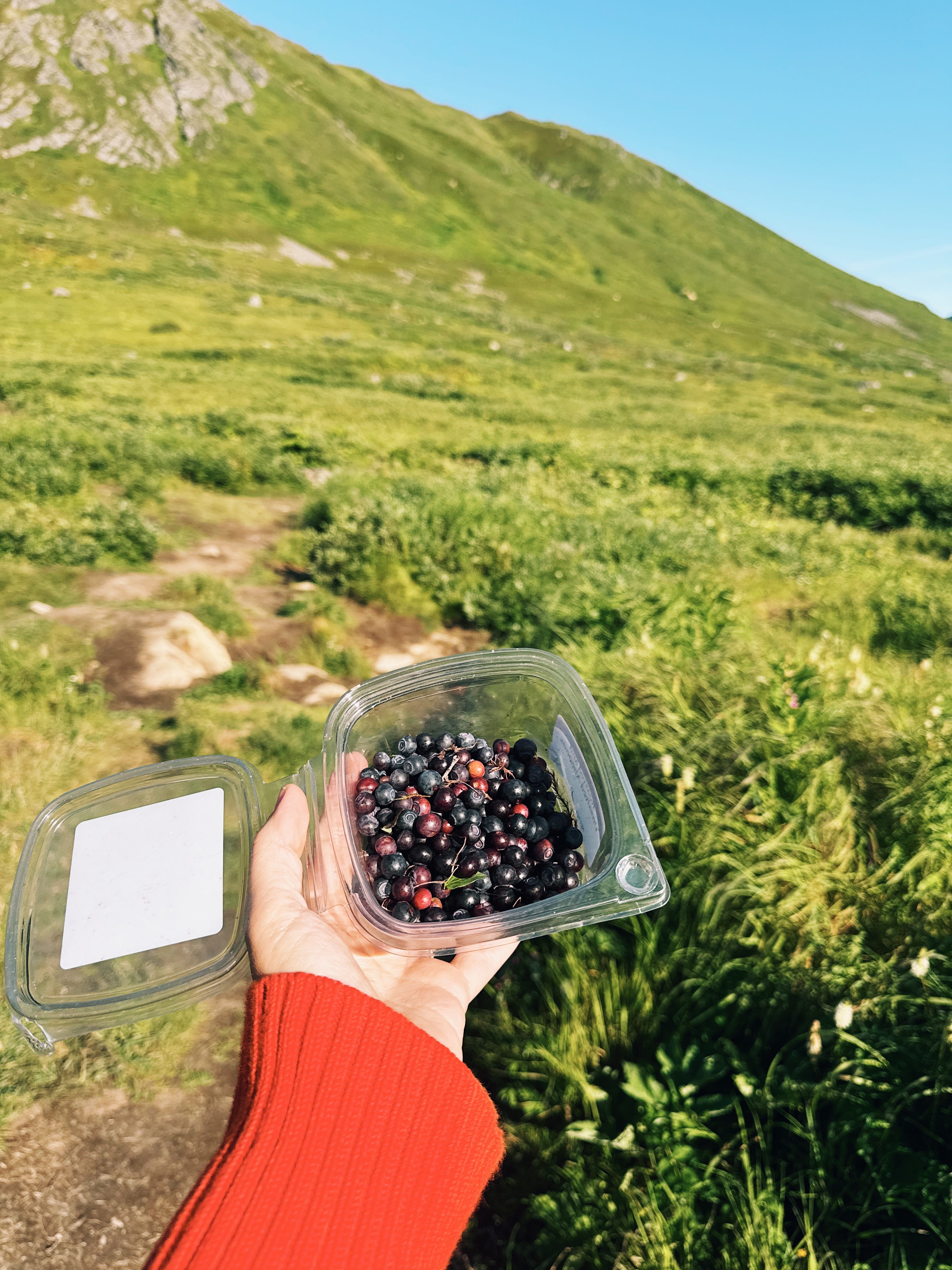
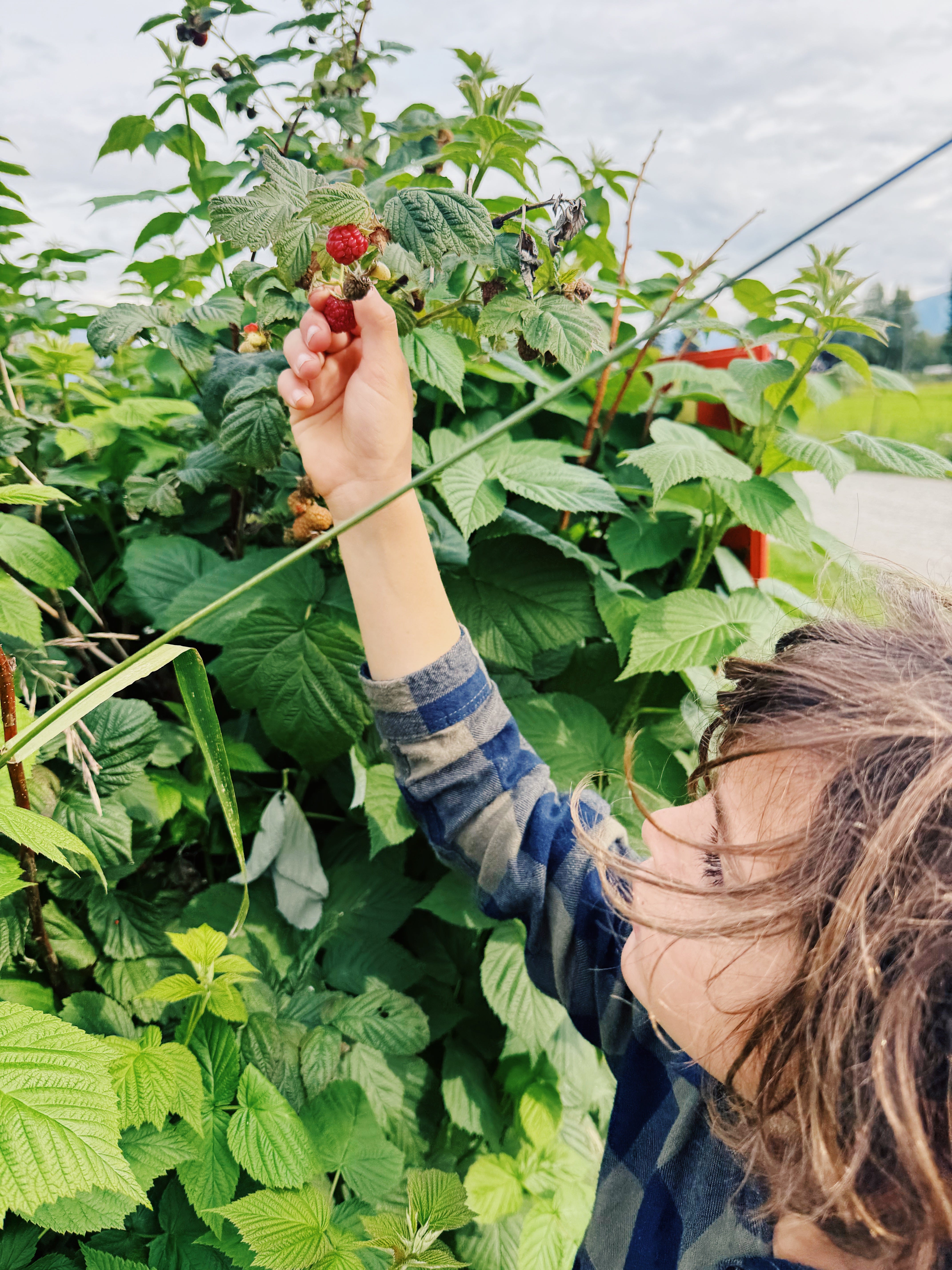
Outside, we found bushes dripping with wild blueberries that we could forage to our hearts’ content. We picked as many as we could fit in our hands and little plastic containers, brought them back to our Airstream, and then found some wild raspberry bushes near our campsite in Palmer, Alaska. We started making purees from these wild berries in our tiny Airstream kitchen—leaving in the seeds, adding a touch of honey — and then popping them in our little oven. A few hours later, we pulled out a very simple, fiber-rich snack that we could cut, roll up, and take on the road.
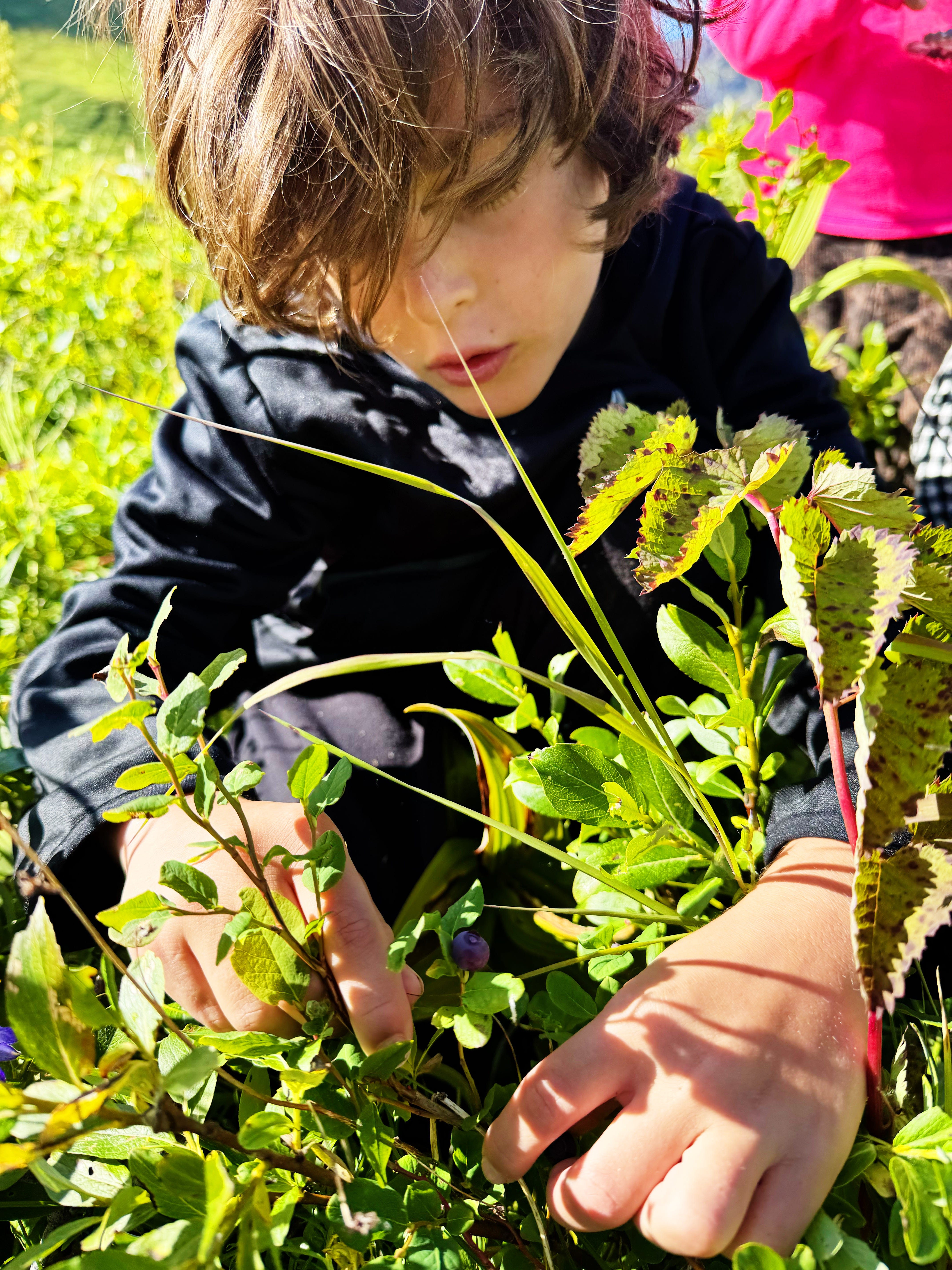
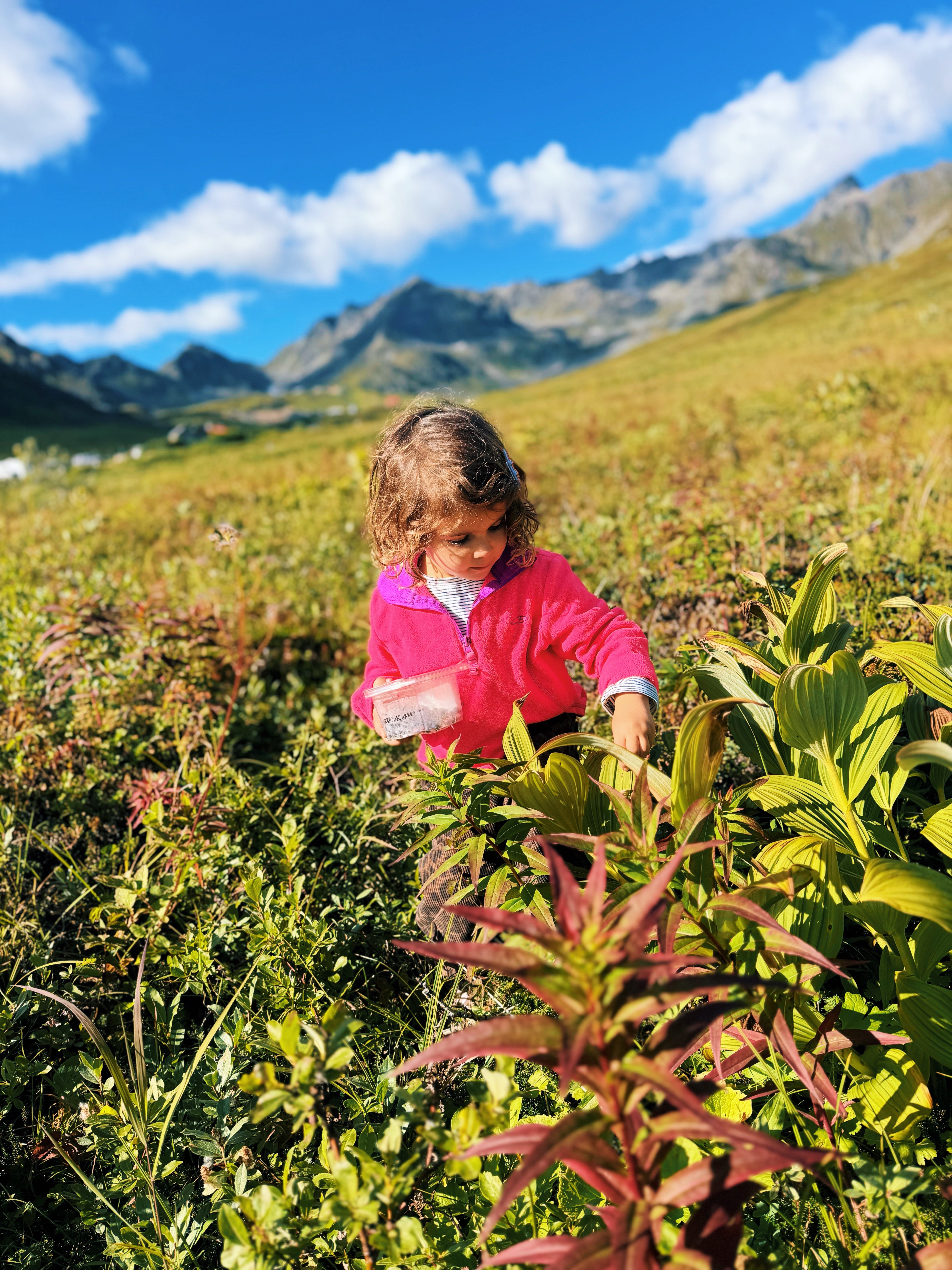
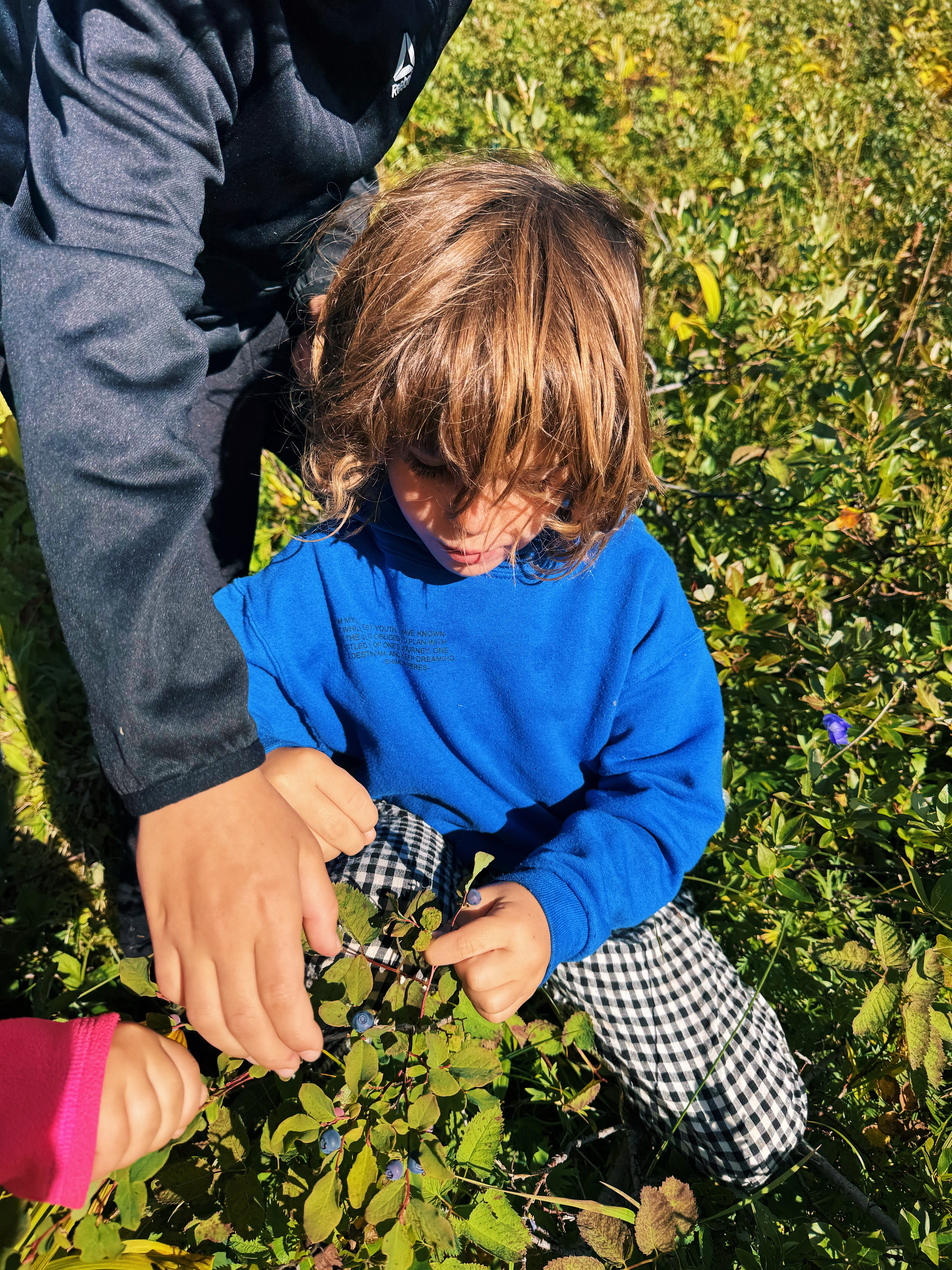
The kids not only loved eating them but also loved helping make them. We picked as a family wherever we could find local, wild berries, sometimes incorporating local rhubarb, saskatoons, or bear berries. Whatever fruit we could find just outside our trailer, wherever we were parked that day, we added to the puree. This was our morning activity: go look for wildlife and wild fruit. So we acted like a family of bears and just gathered berries.
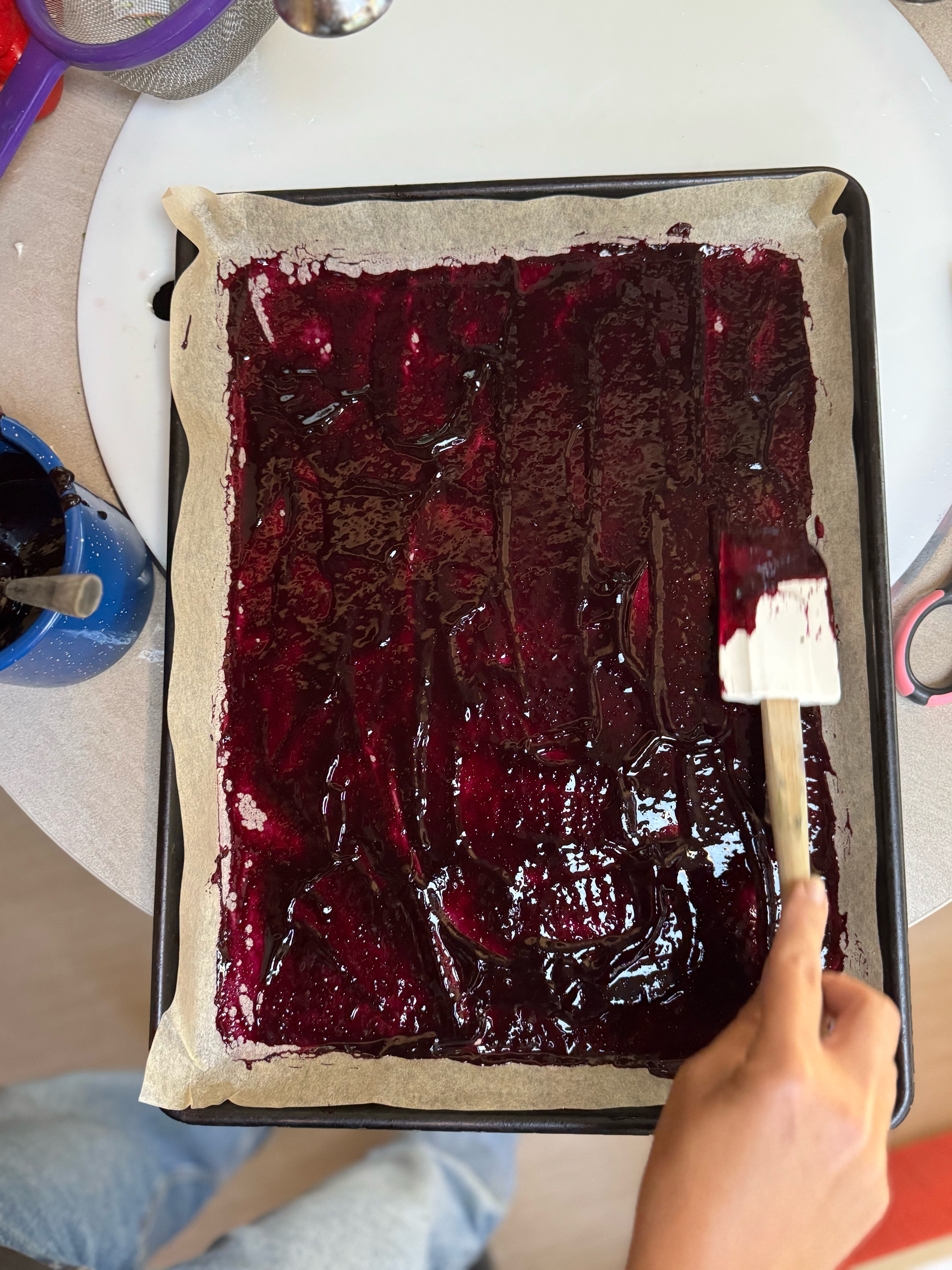
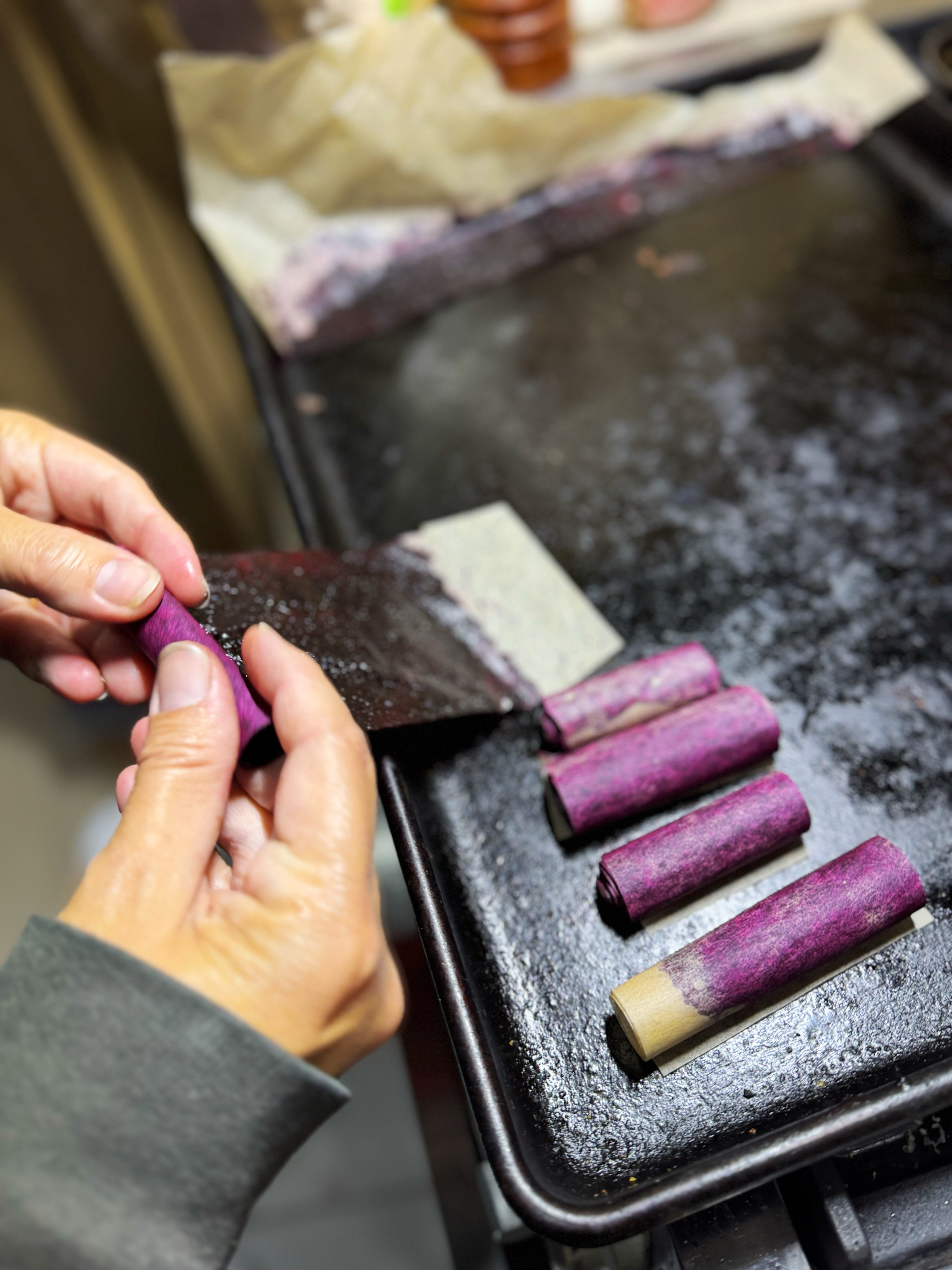
We called them “fruit rollups” at the time because they reminded us of the snack we had as kids. The main difference is that these ones were made with real fruit, no artificial dyes or ingredients, and were actually good for you. We made as many of these fruit roll-ups as we could, knowing how handy they would be on the long drives. And sure enough, our kids’ tummies got better. No more constipation. No more camping outside public toilets. We gave them out to some other kids we met on the road, and they loved them too.
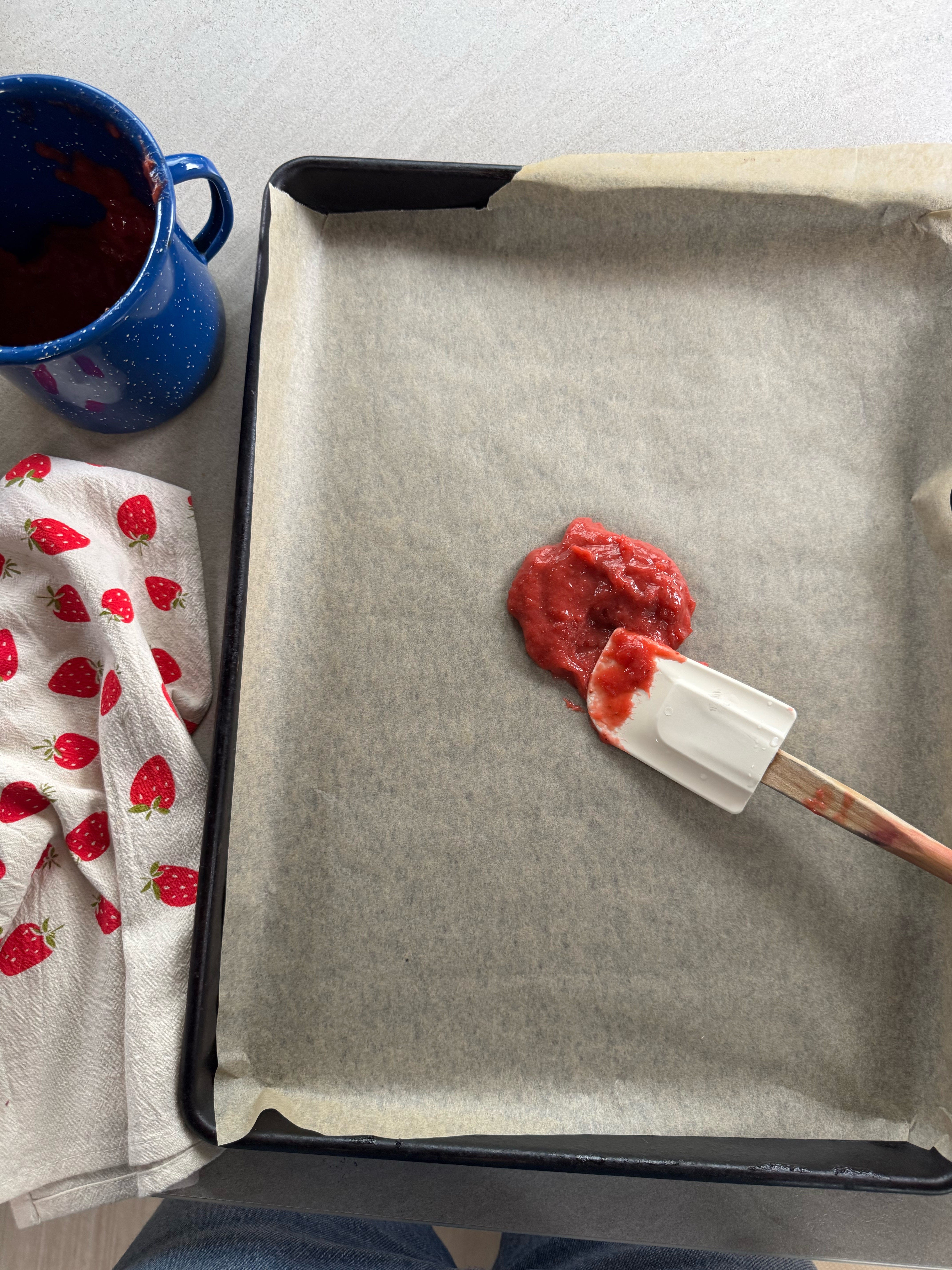
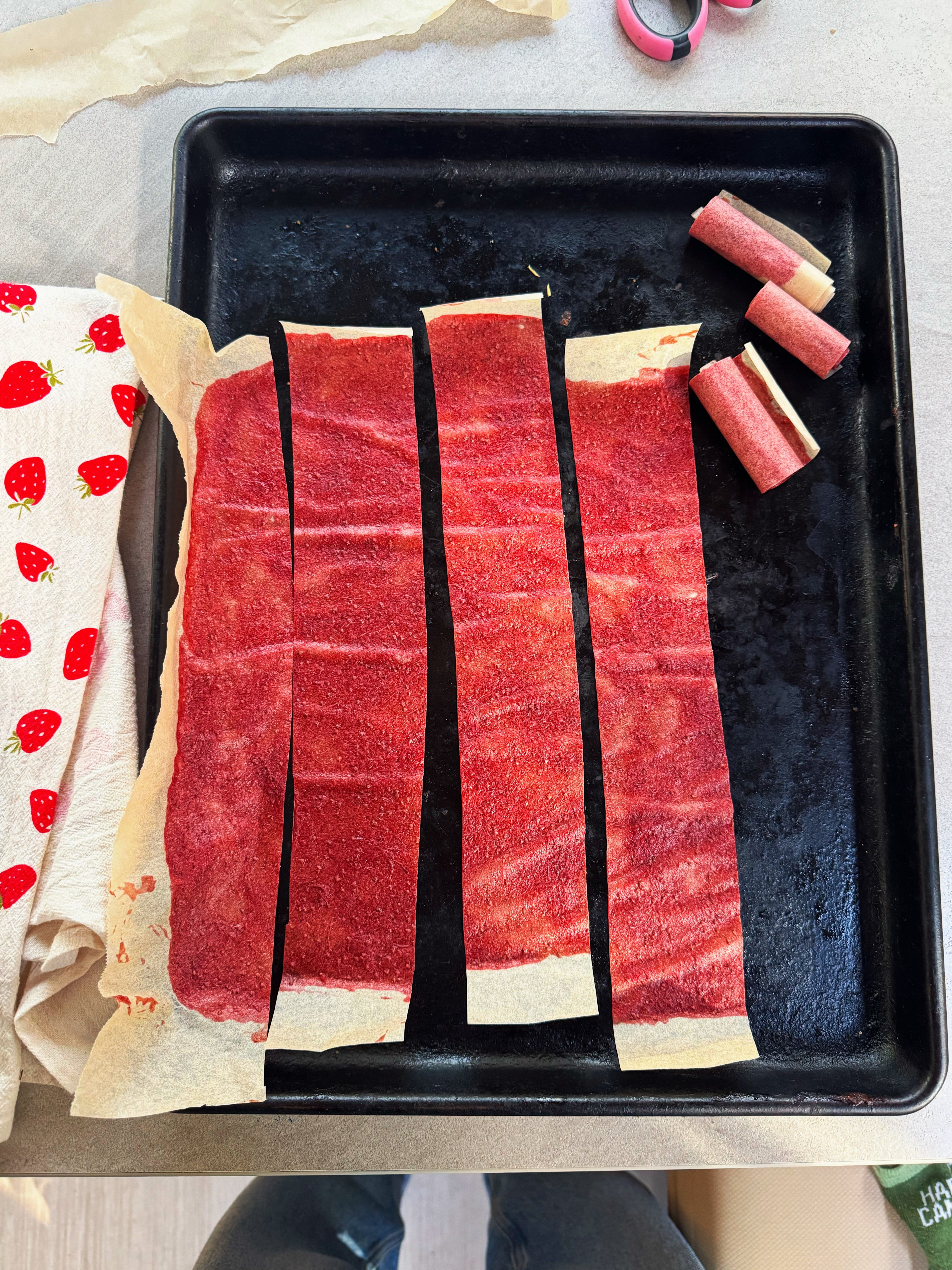
Eventually, the road trip came to an end. We didn’t think much more about these snacks, honestly, after saying goodbye to our Airstream outside Yosemite.
As the weather grew cold up north, we flew down to Costa Rica’s South Pacific region just outside the Osa peninsula, where we found a magical little hillside village with cool air and a one-of-a-kind Waldorf school in the jungle. The kids were happy to be back in a routine, and suddenly we found ourselves with some adult time.
We weren’t sure what to do with this time, so we went on walks in the forest, did yoga, and tried to reconnect with each other and ourselves. After an intense road trip with three kids, it almost felt like, after 13 years of marriage, we had just started dating again. After so many months of being in nonstop caretaker/parent mode, we honestly didn’t even have words to say to one another.
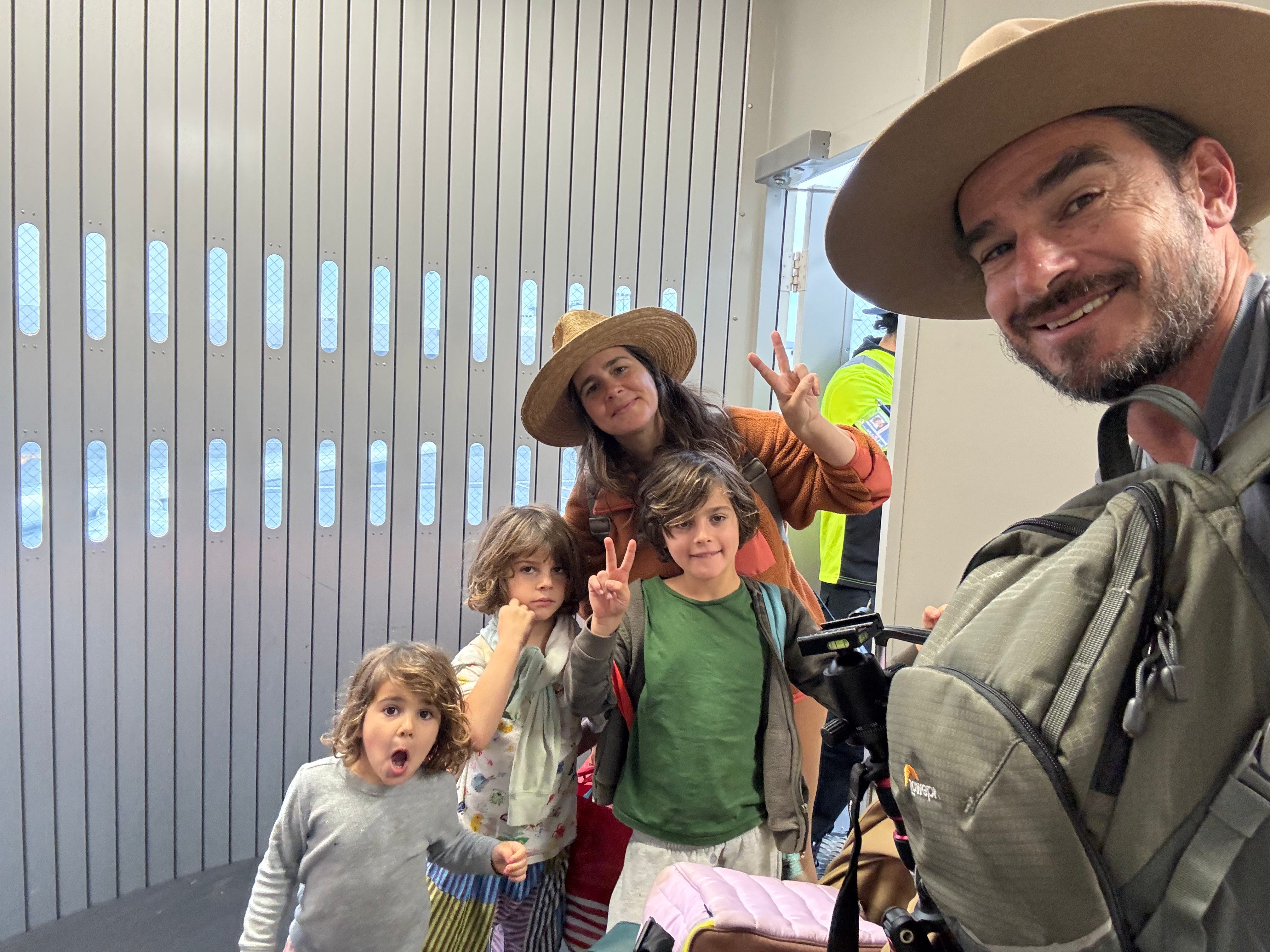
But with stillness, those big and daunting questions felt like clouds looming over our heads. Where would we go next? Where would we ultimately settle down? What to do with our house in Miami that was being rented? What is the future of the Earth Parade project? What should we do with the rest of our lives?
We had a lot to figure out.
But at some point, we realized we weren’t actually ready to confront these questions. Moreover, the answers wouldn’t come from some rational, decision-making process, and certainly not from doomscrolling on social media. So we kind of just put the questions and our phones on the shelf and embraced the stillness and the quiet. We joked about our existential conundrums. We observed the patterns of wildlife and tropical foliage. We became friends with a sweet Israeli family we met at the school. They were from Kibbutz Be’eri and had survived the 10/7 massacre by hiding in a safe room with their toddlers, and were bravely seeking out some kind of new life while dealing with the trauma of the past years. We felt comfort in knowing that so many others, at least in this part of the world, were similarly discovering their new path, regardless of their reasons for seeking.
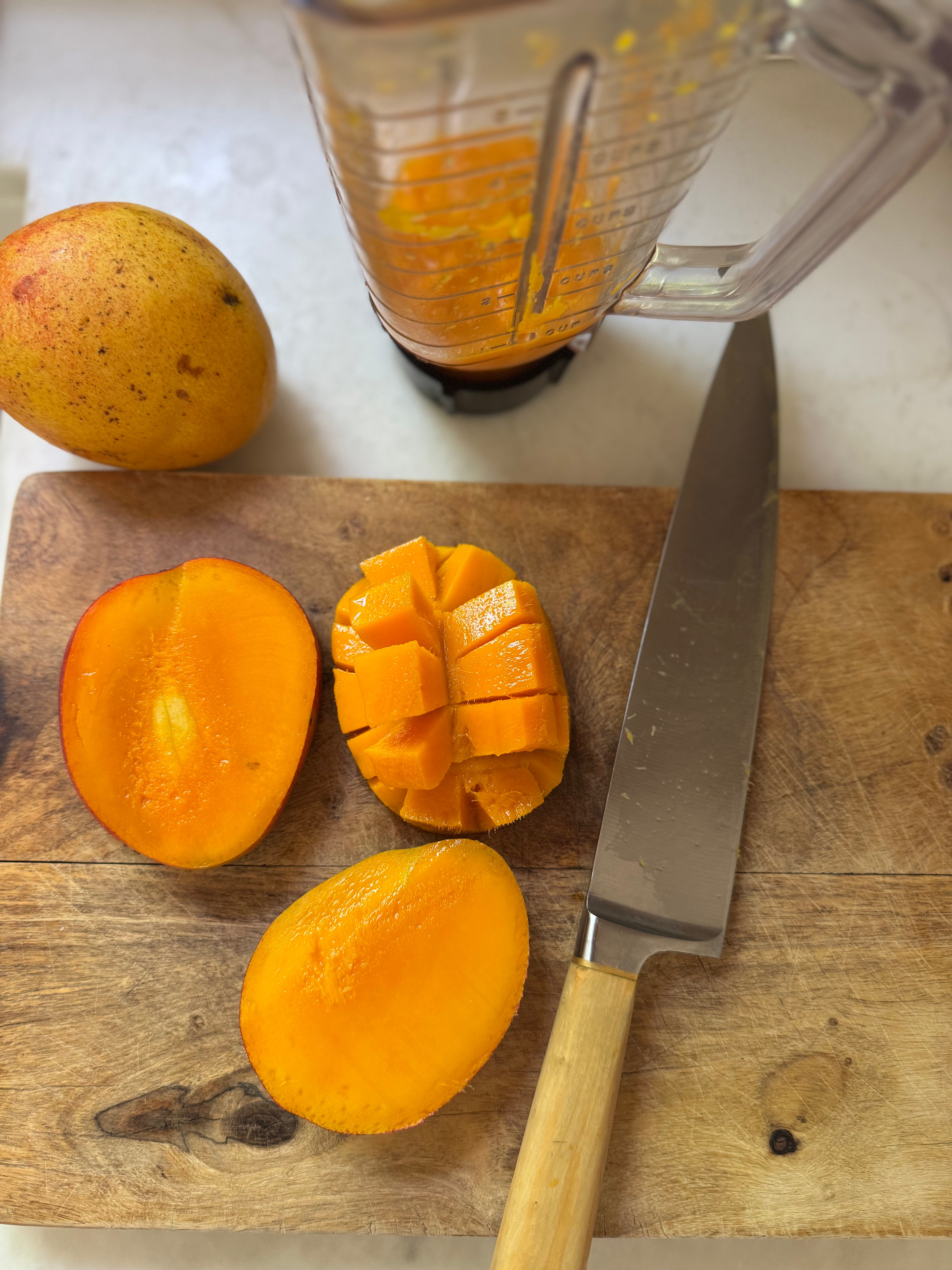
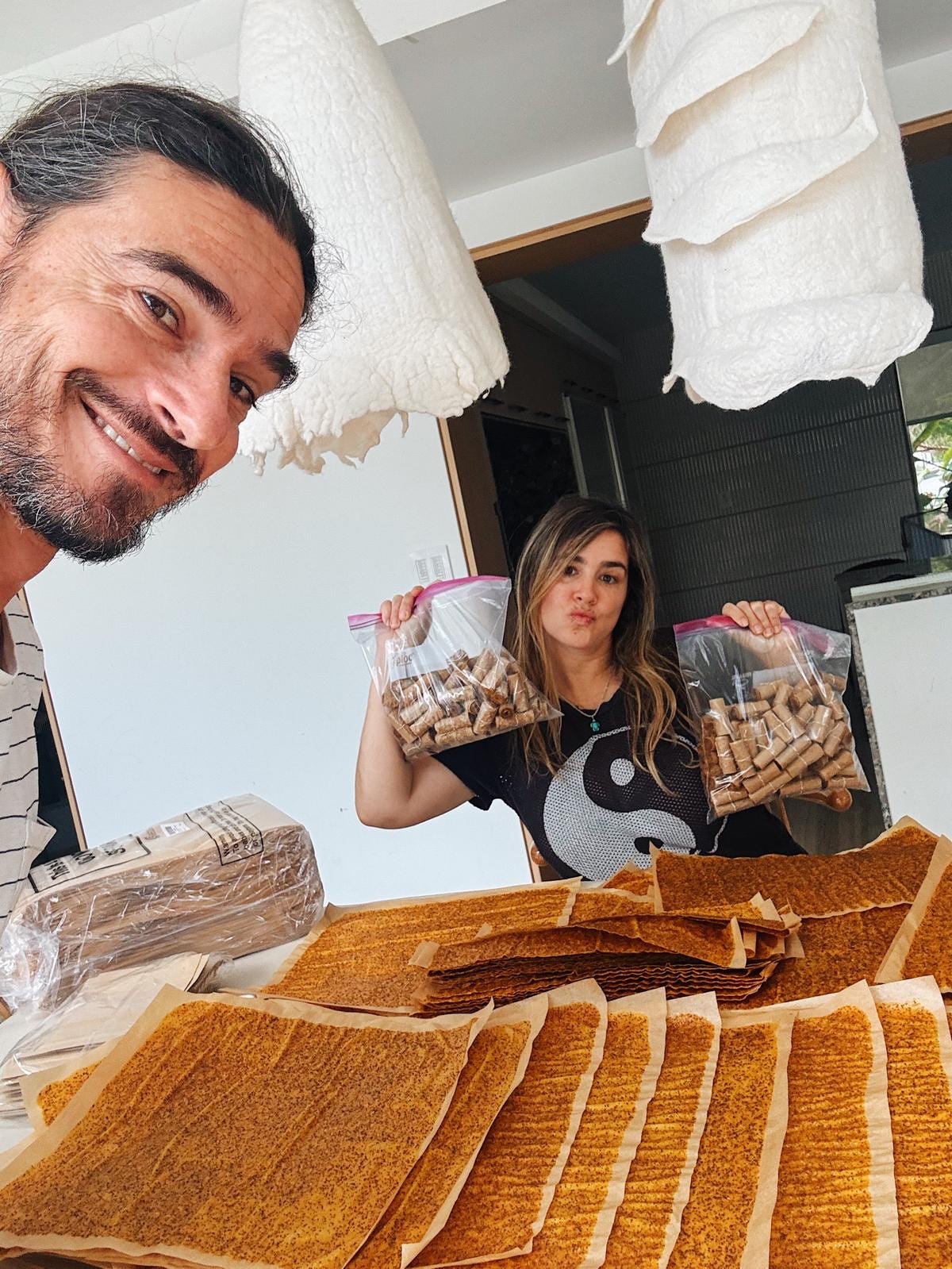
And we still had time on our hands, so while the kids were at school, we made our fruit roll-up–like snacks, which we started calling fruit scrolls because they reminded us of mini Torah scrolls on parchment paper. We recalled that we had actually started making them years ago in Miami during bumper mango crops, when we had more fruit than we could possibly eat and needed a way to preserve it.
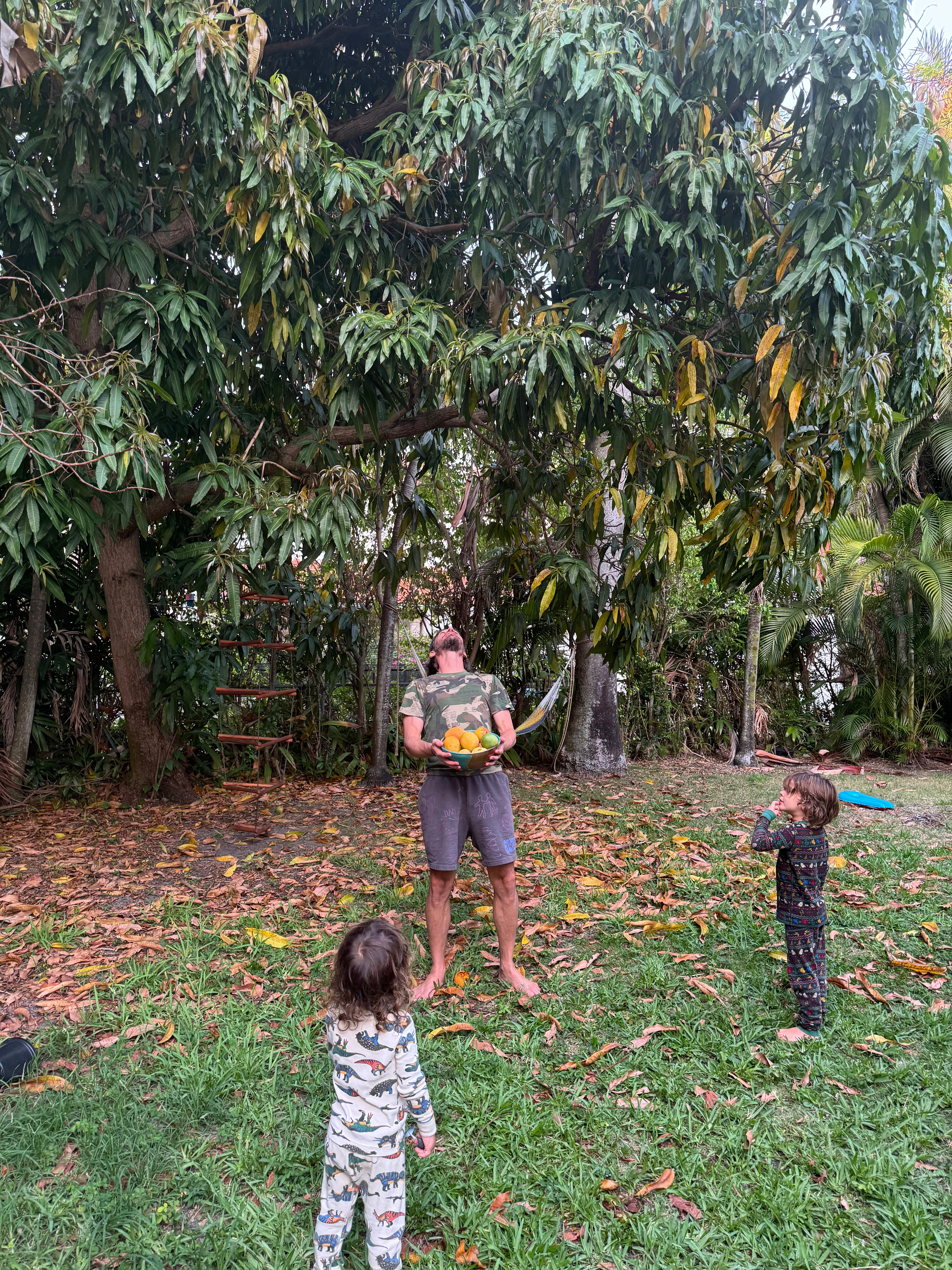
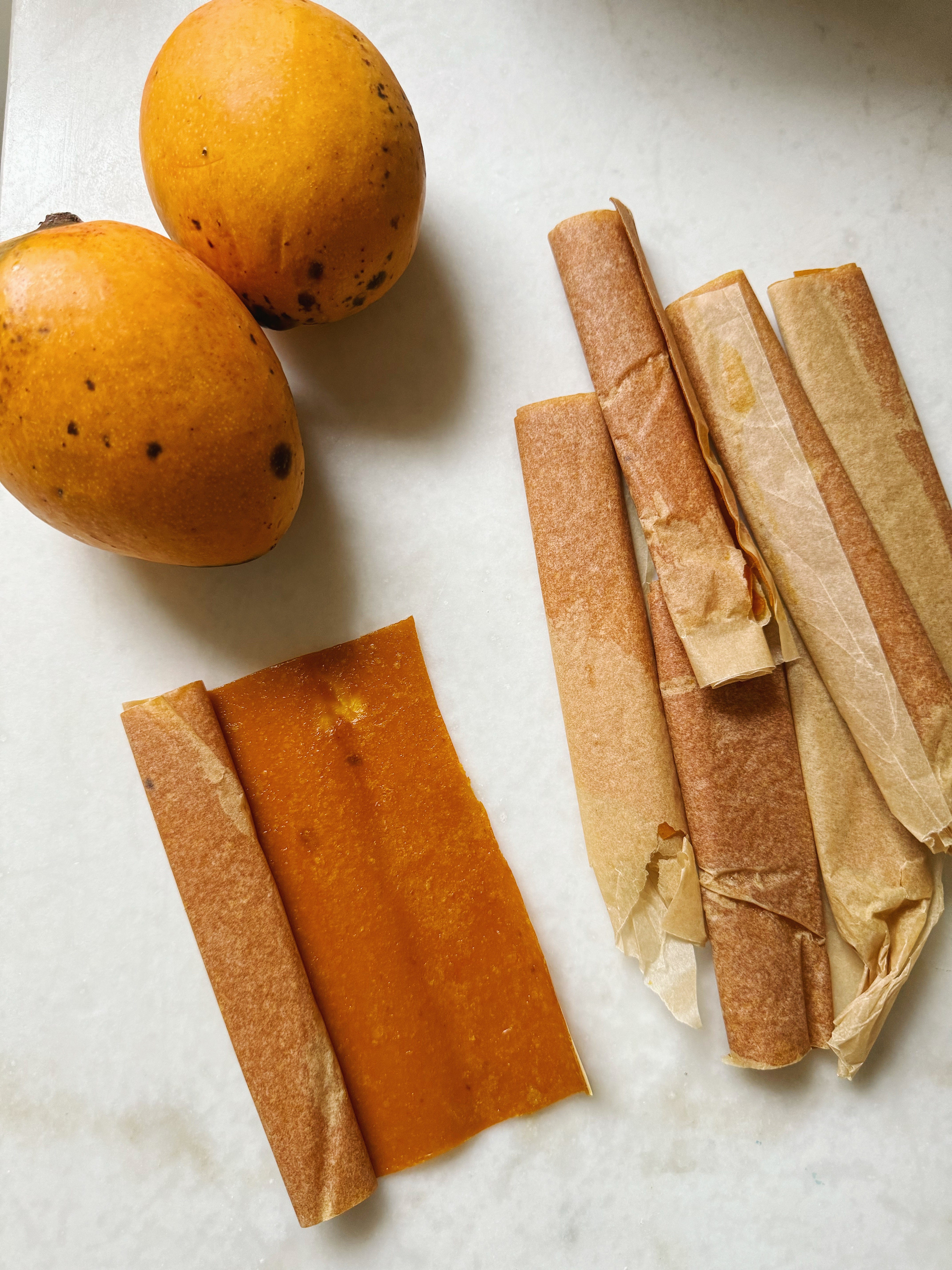
The vibe was totally different now.
The more conservative, berry-based sweet treat from the Alaska–Canada highway got to meet its zesty prima from another clima.
We were excited to have fun with tropical flavors that reminded us of childhood in Miami. We were also no longer making them in a tiny Airstream kitchen with kids jumping on our backs as we crouched down to pull out a hot tray, for a change. We had some hours in the day to just decompress. And the best part is we had bananas, guanabanas, and papayas growing in the backyard of our Airbnb. And when that wasn’t enough, we had an abundant tropical fruit stand just on the other side of the dirt road we were living on.
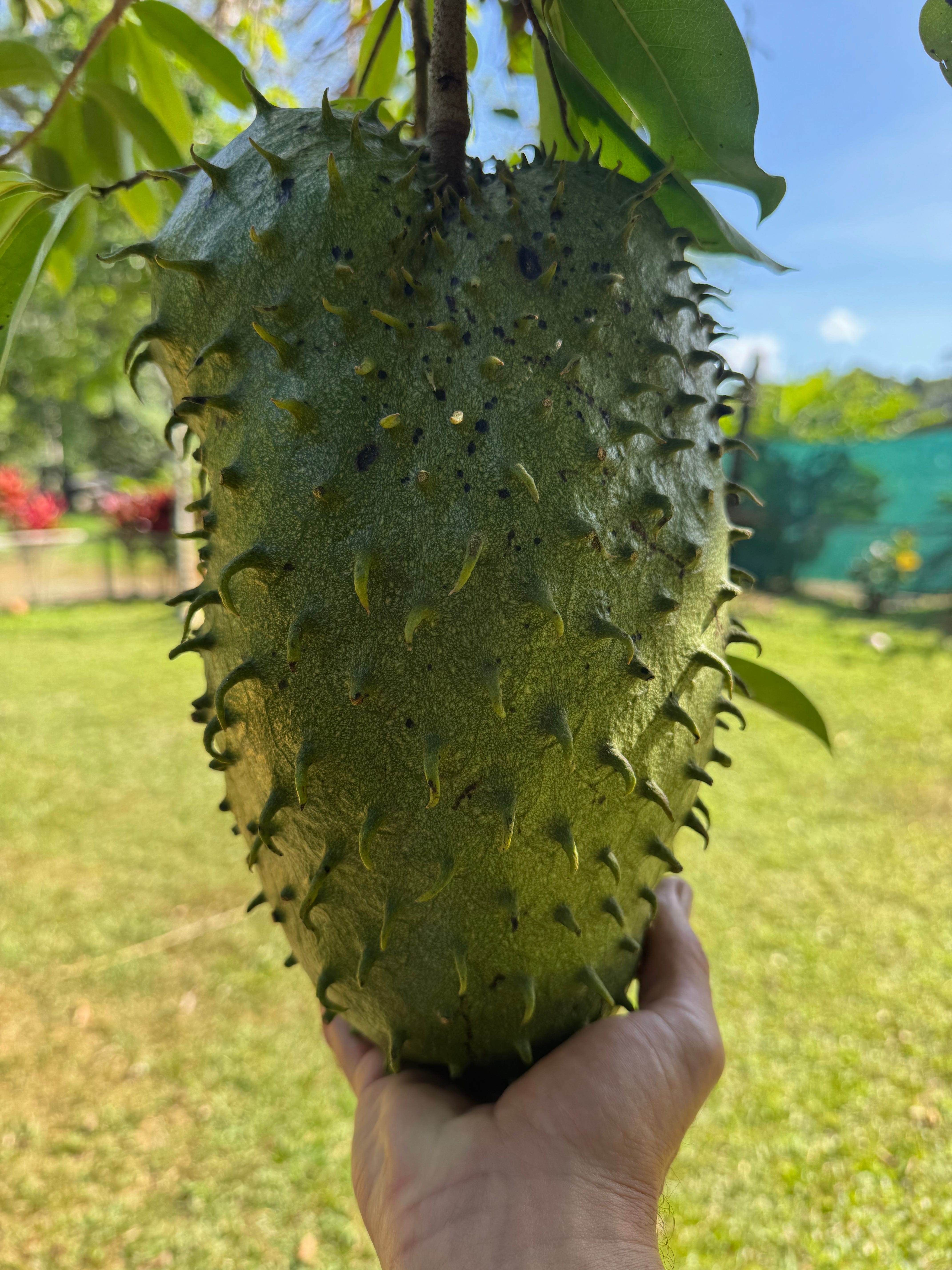
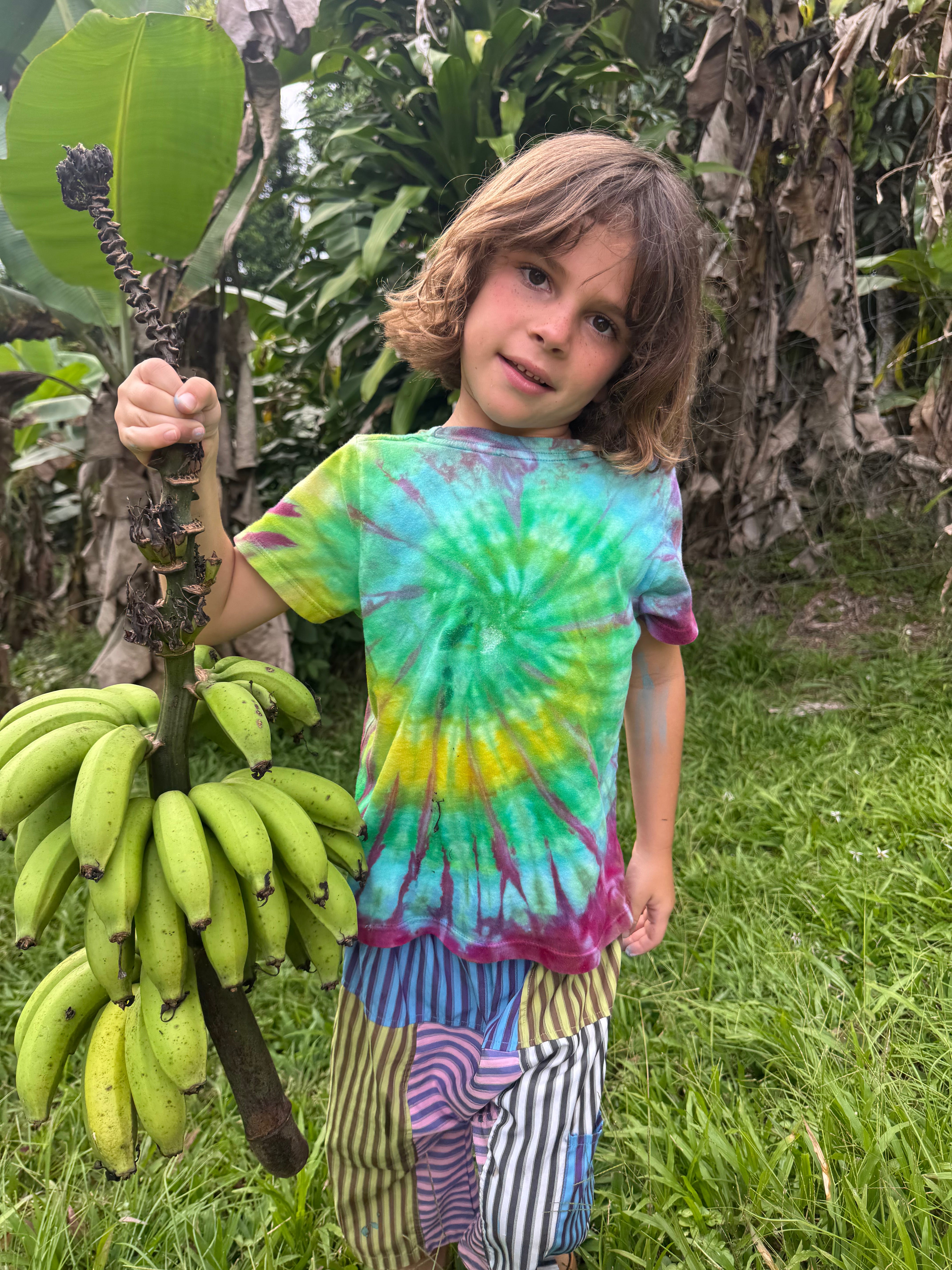
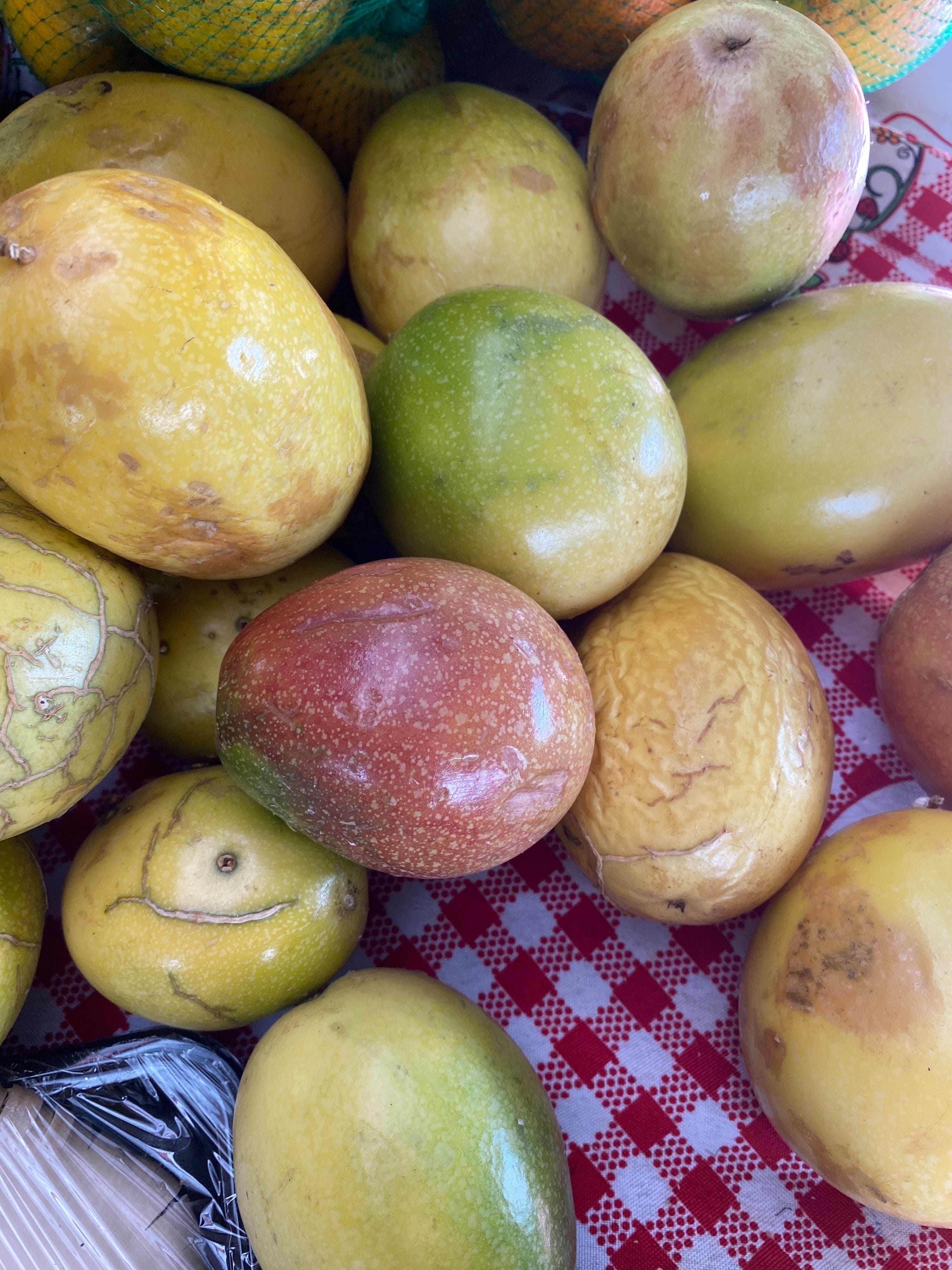
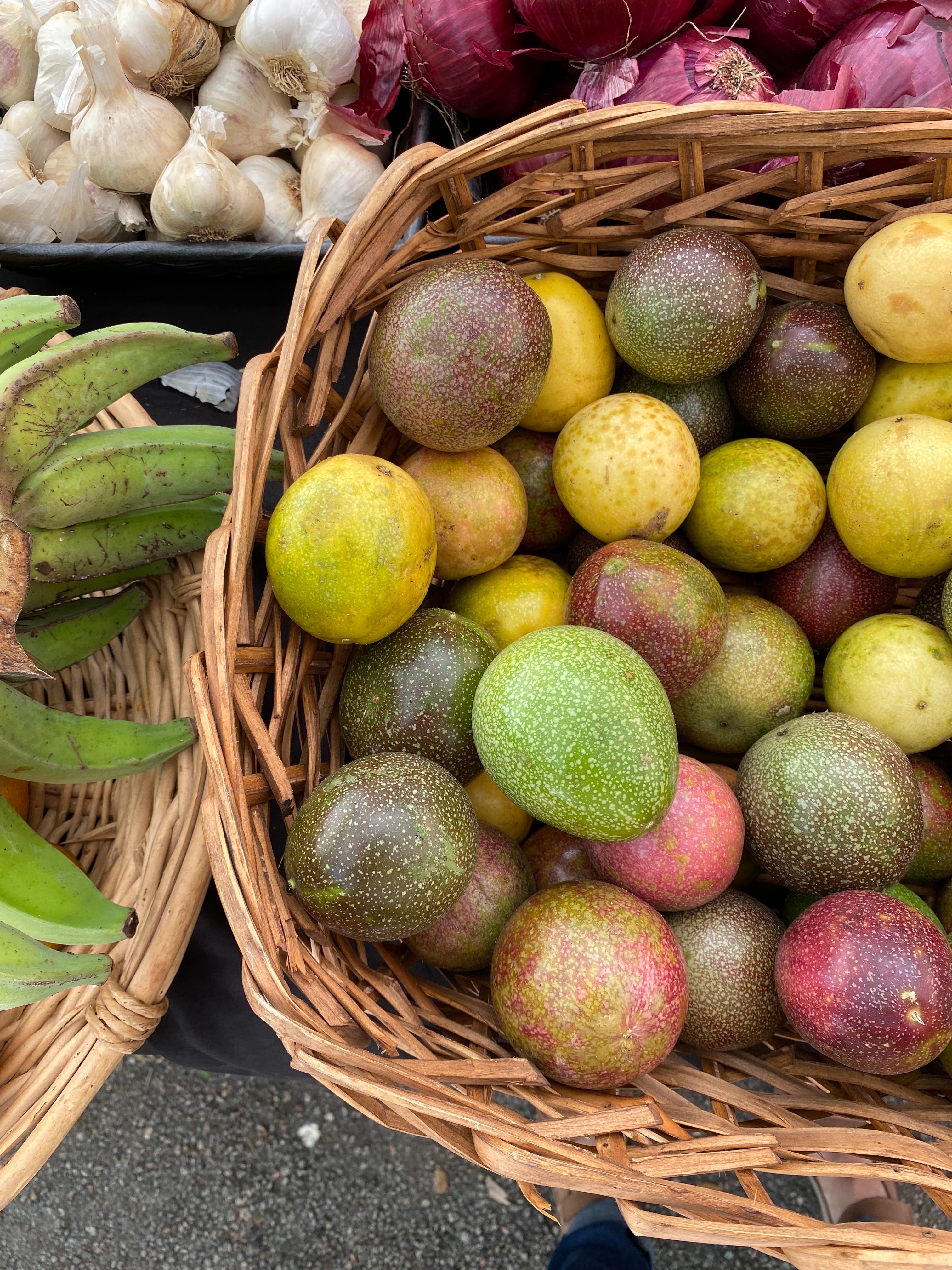
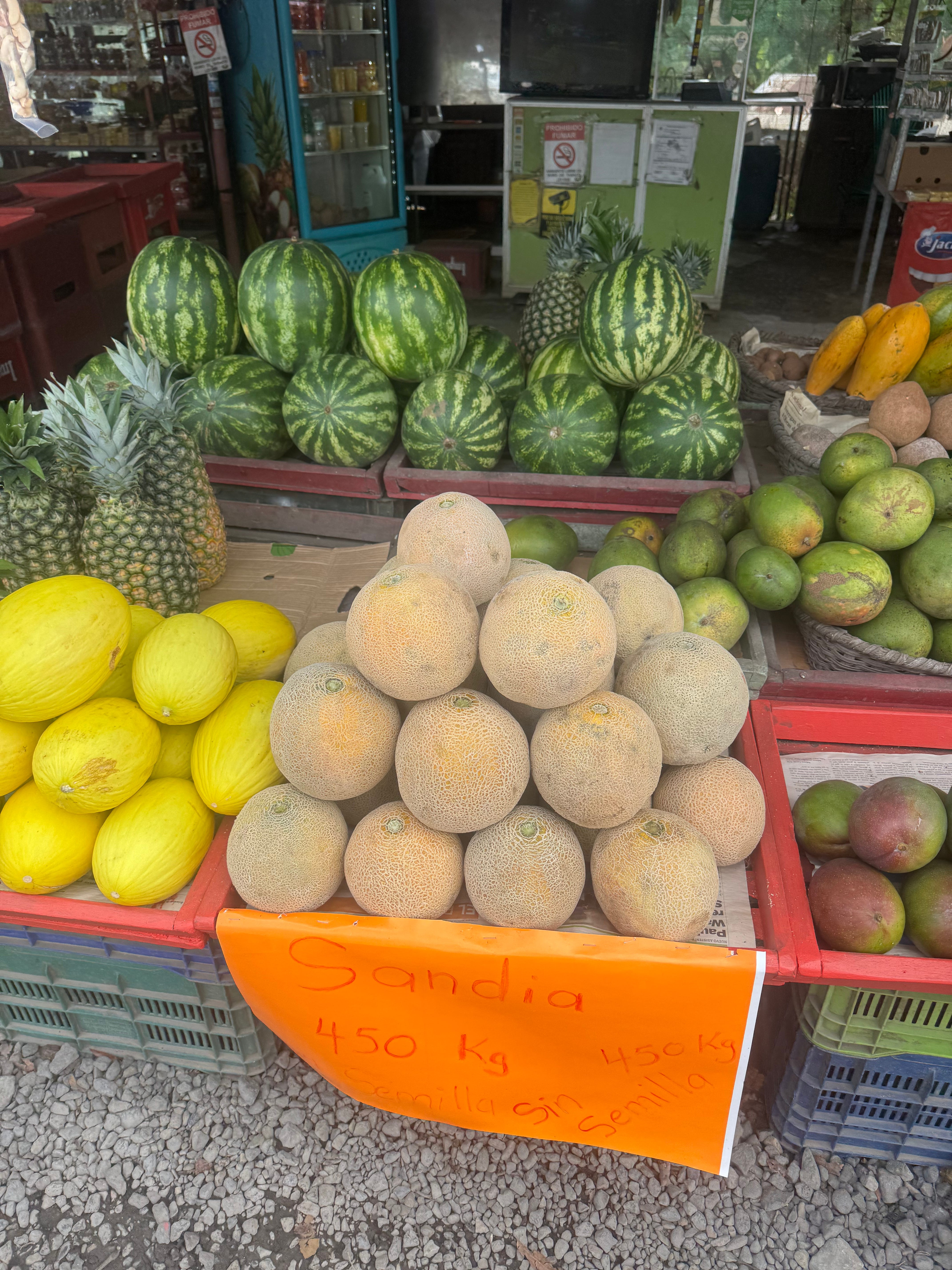
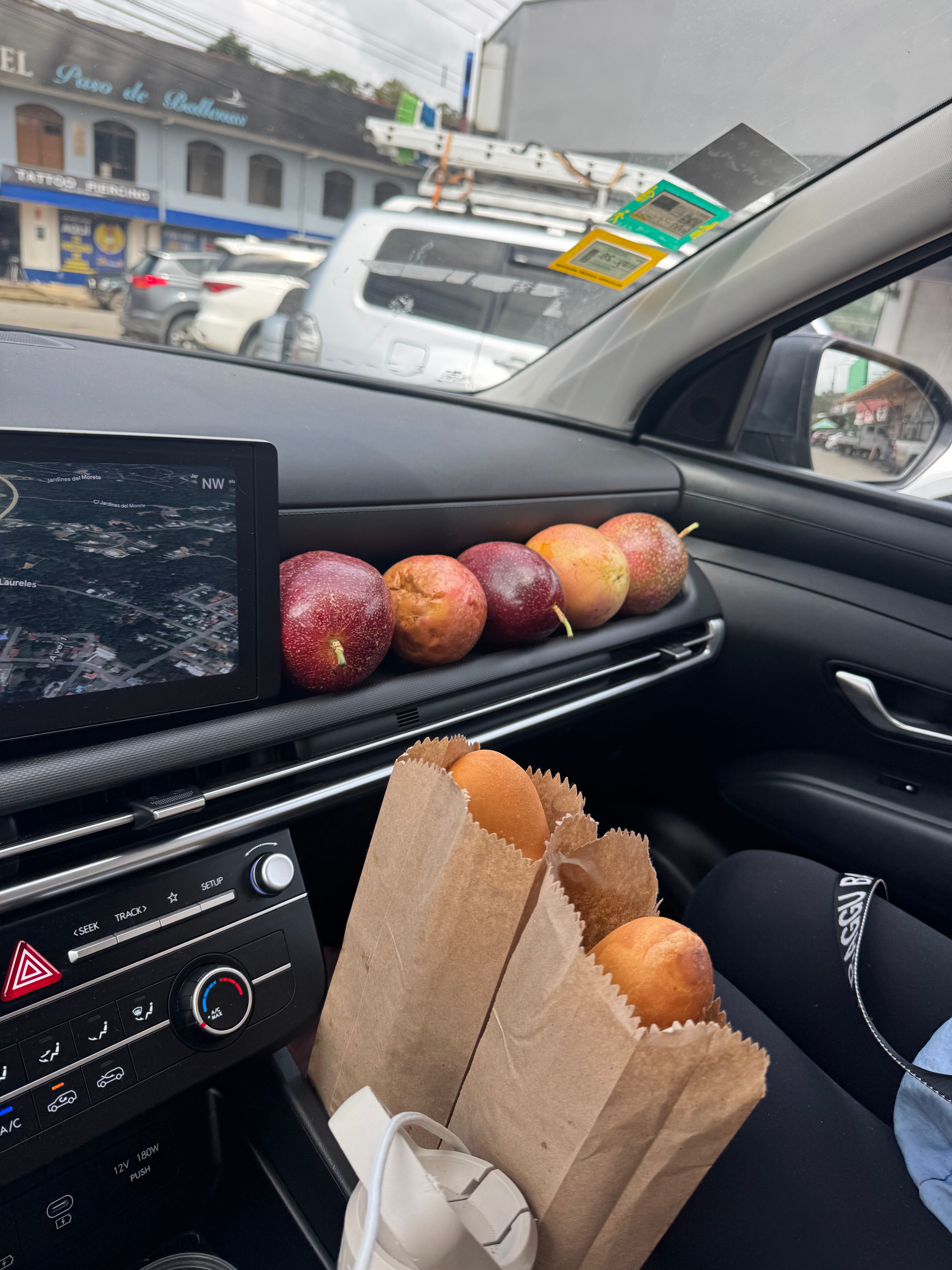
There was something about making these that felt so therapeutic, so visceral, and so beautiful that we just kind of surrendered to the process. It starts with the selection of the fruit, each one a sensorial proof of the parallel miracles of creation and evolution. Touching and smelling the skin, trying to decipher the mystery of what lies inside. Finally, you cut it open, and it is as if you have suddenly crashed an olfactory party before the cops arrive. Neurochemicals in your brain get released as the smell takes you to a happy place.
The dissected fruit is vulnerable and willingly gives itself and its progeny to you. Like in the Garden of Eden, the fruit is all yours for the taking. But in this case, it sacrifices its life with no snaking, no trickery—just a hope that a lucky few of the thousands of tiny black seeds will find their way back to the earth to create a new generation of plants. Their darkness a stark contrast to the flesh, which reflects bright wavelengths of light that our eyes see as oranges, reds, and yellows. This unconscious act of regeneration manifests in the seductive, alluring, and sweet notes that titillate the tongues of all animals, making us salivate and want to taste it again and again.
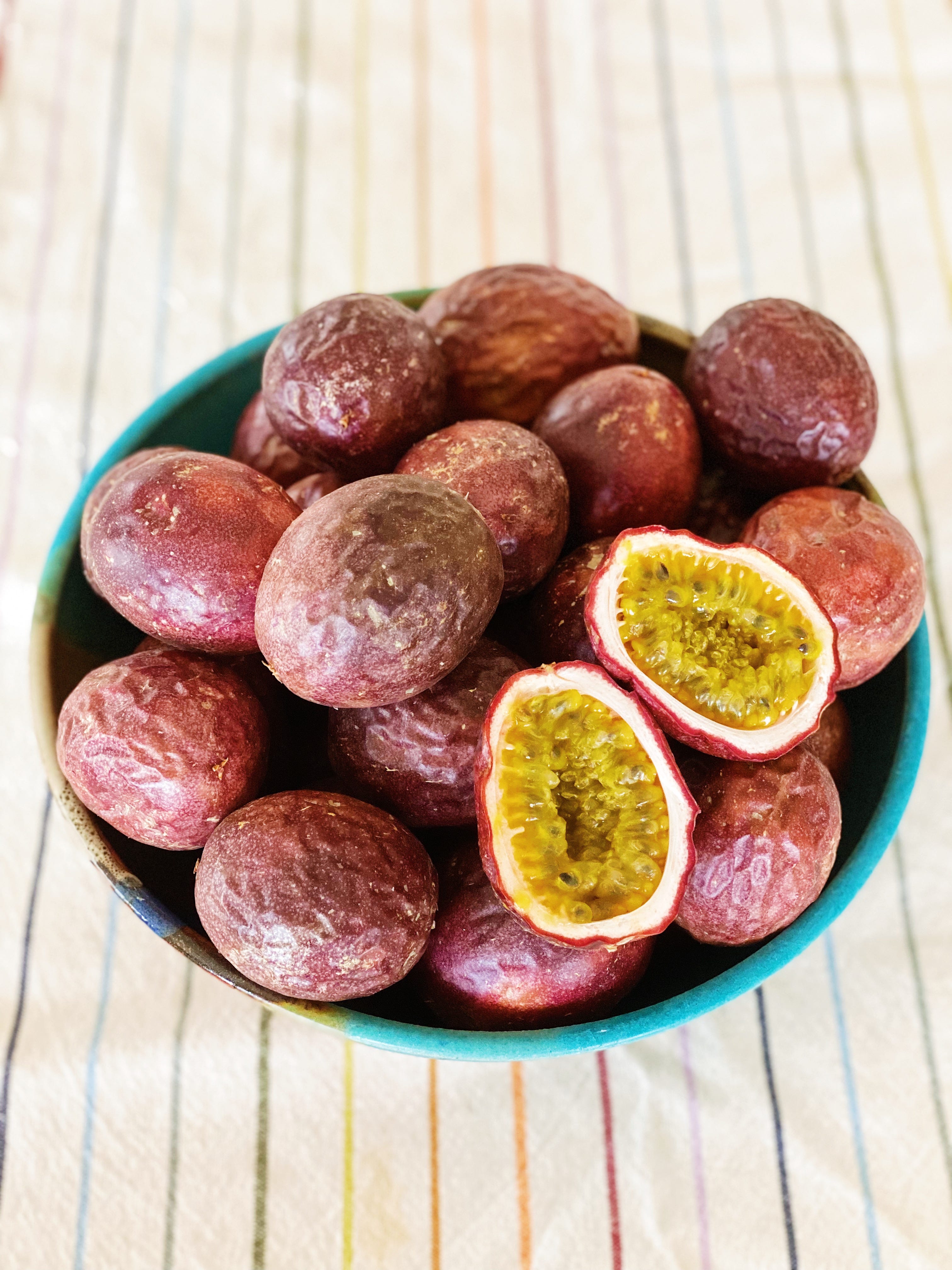
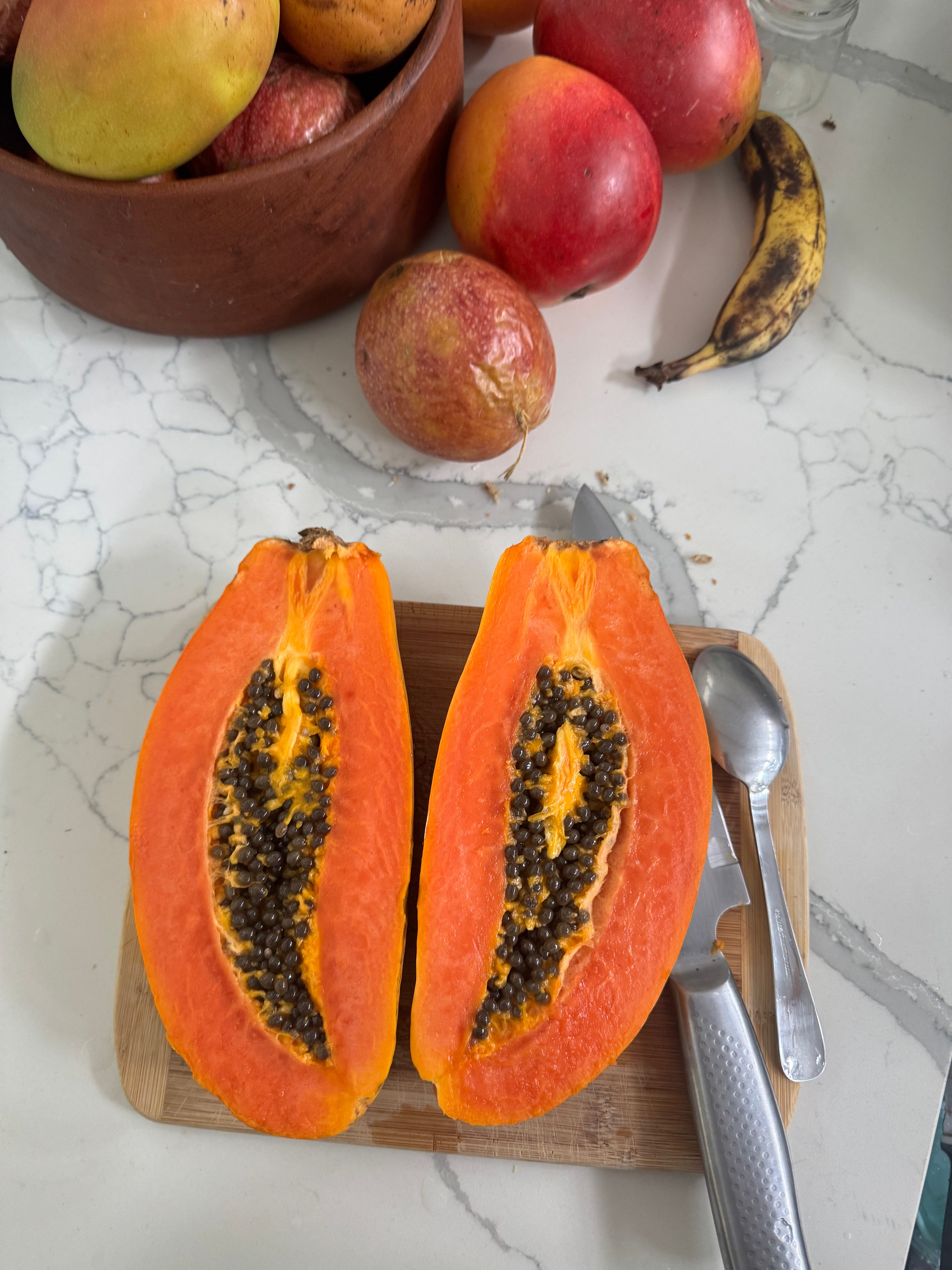
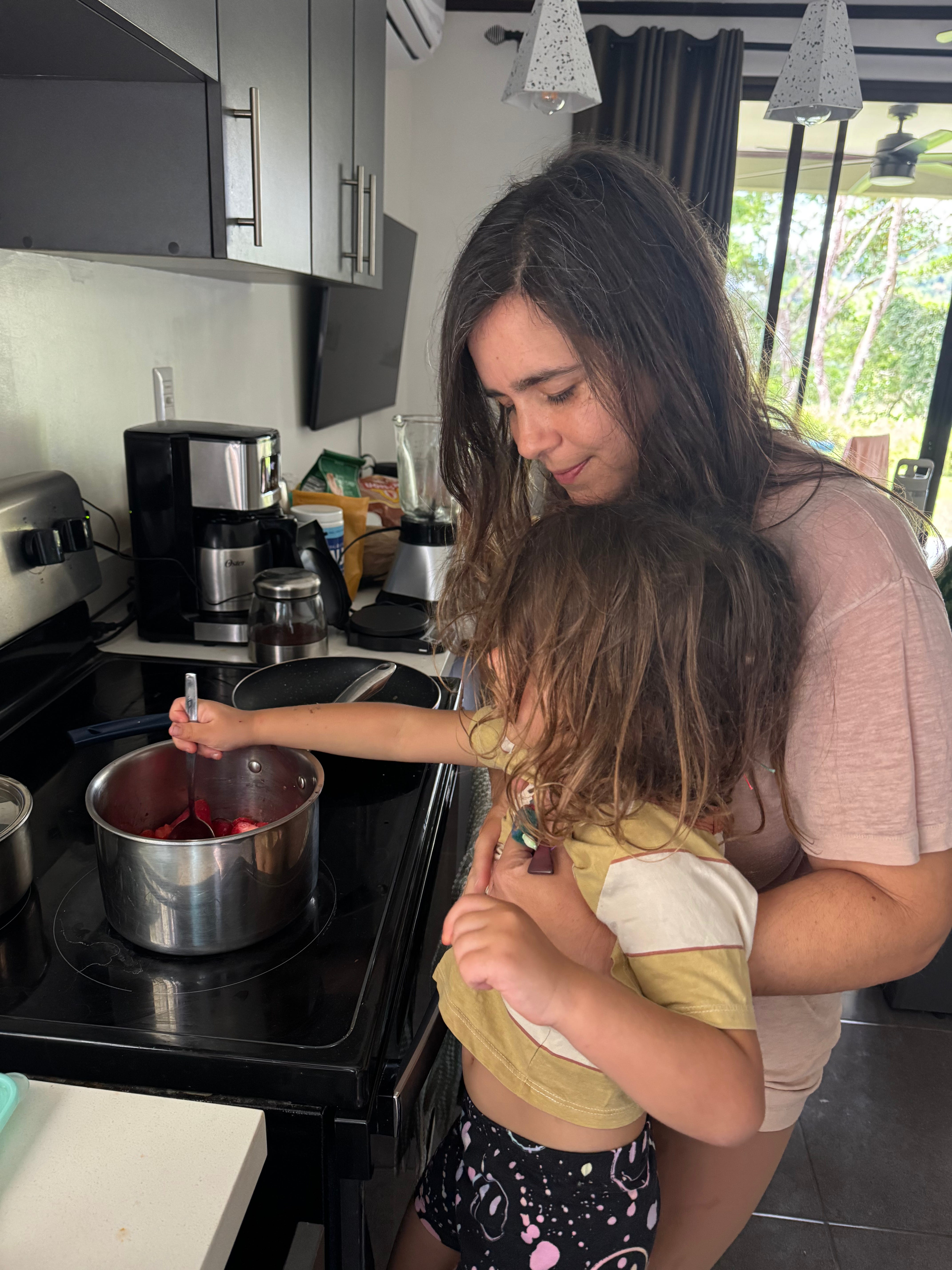
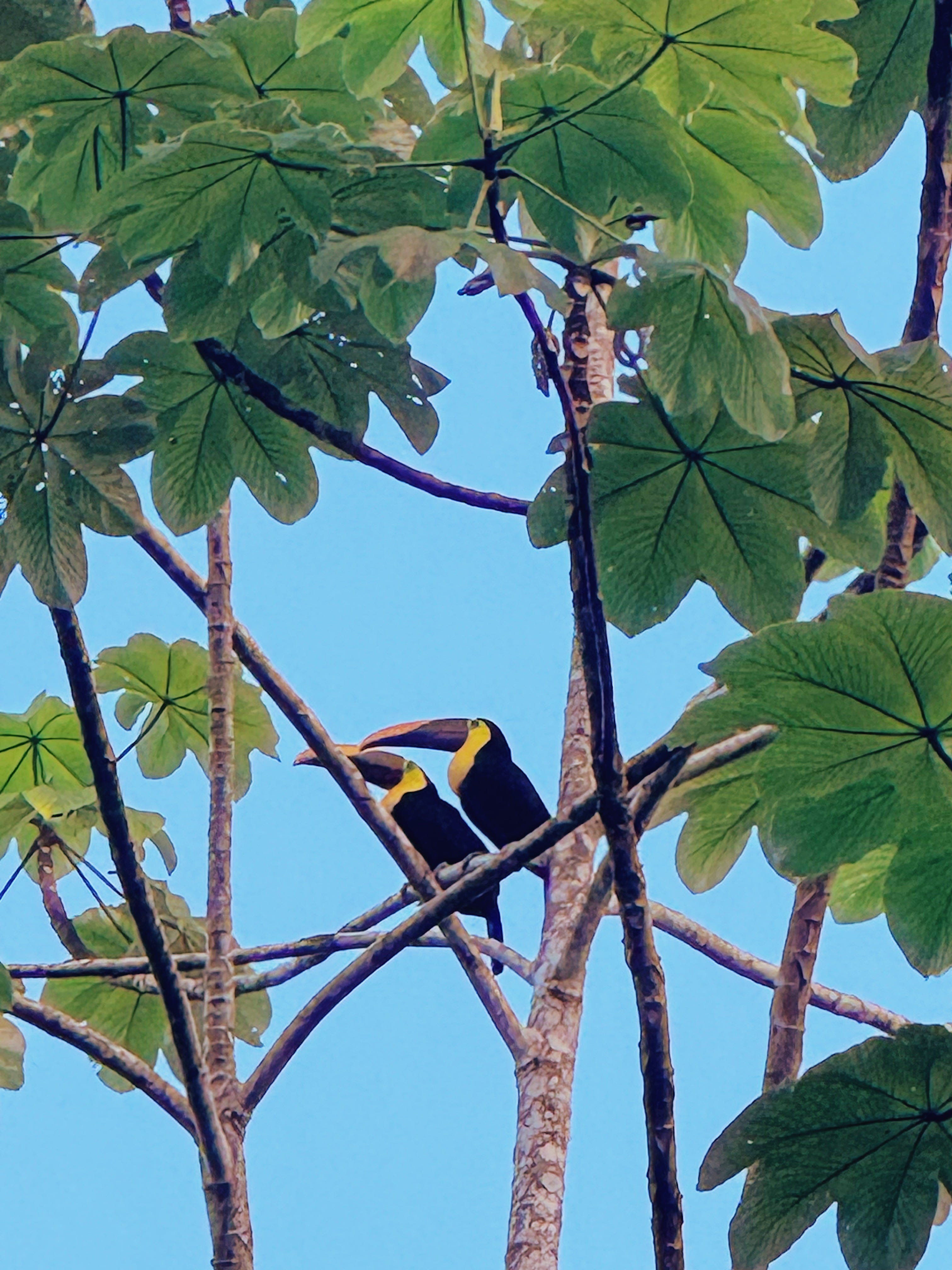
We experimented with every tropical fruit we could find to the sounds of the toucans calling. Eventually, we put on Bad Bunny, or Toots and the Maytals, or the Ramones, at a sensible volume, and just made lots and lots of scrolls.
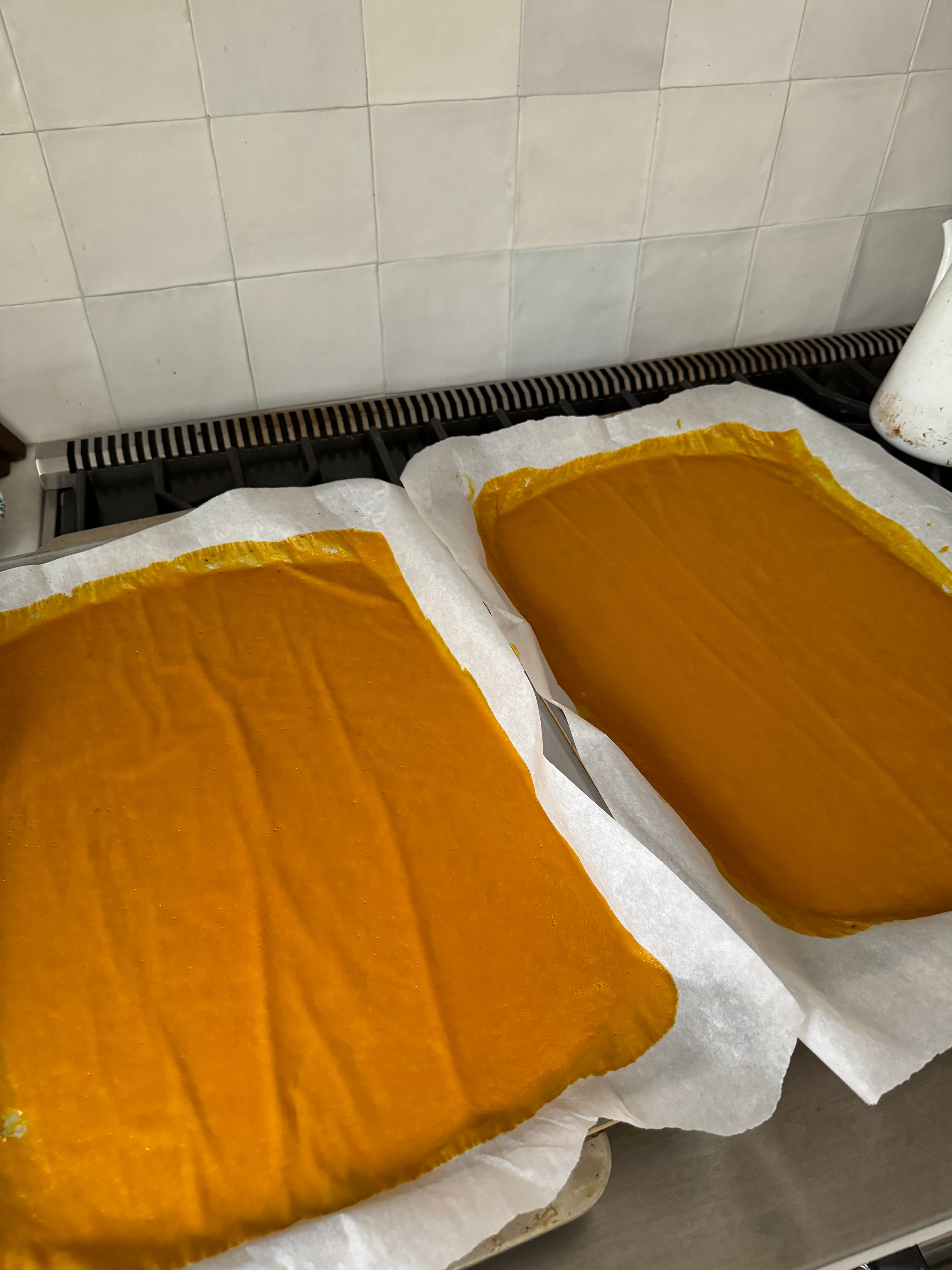
After tasting, we blend the fruits, along with their seeds, pulps, and sometimes rinds, into bright new colors and tangy flavor combinations. It’s a great feeling once everything is in the oven or dehydrator, when we can do something else, knowing the heat is working its magic, metamorphosing it from a liquid form into something more solid, yet stretchy and playful. For both the fruit and for us, we go through a kind of catharsis. A changing of form into something lighter.
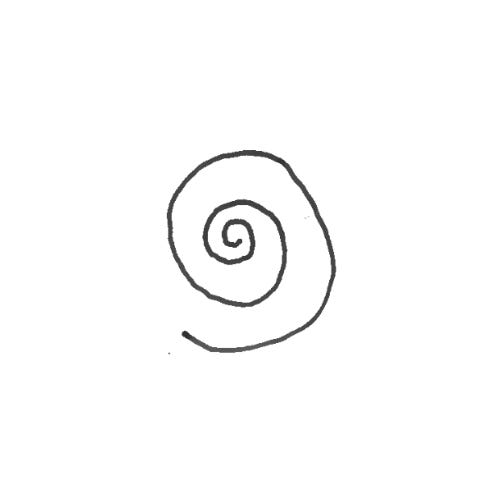
When it comes out, the water is mostly gone—dry, but very much alive. We then cut them into geometric strips. And the final act, creating the scroll, is a silent, satisfying meditation. We roll them into an imperfect Fibonacci spiral, which coincidentally was the icon we chose for our first familial labor of love, Earth Parade.
Coincidence?
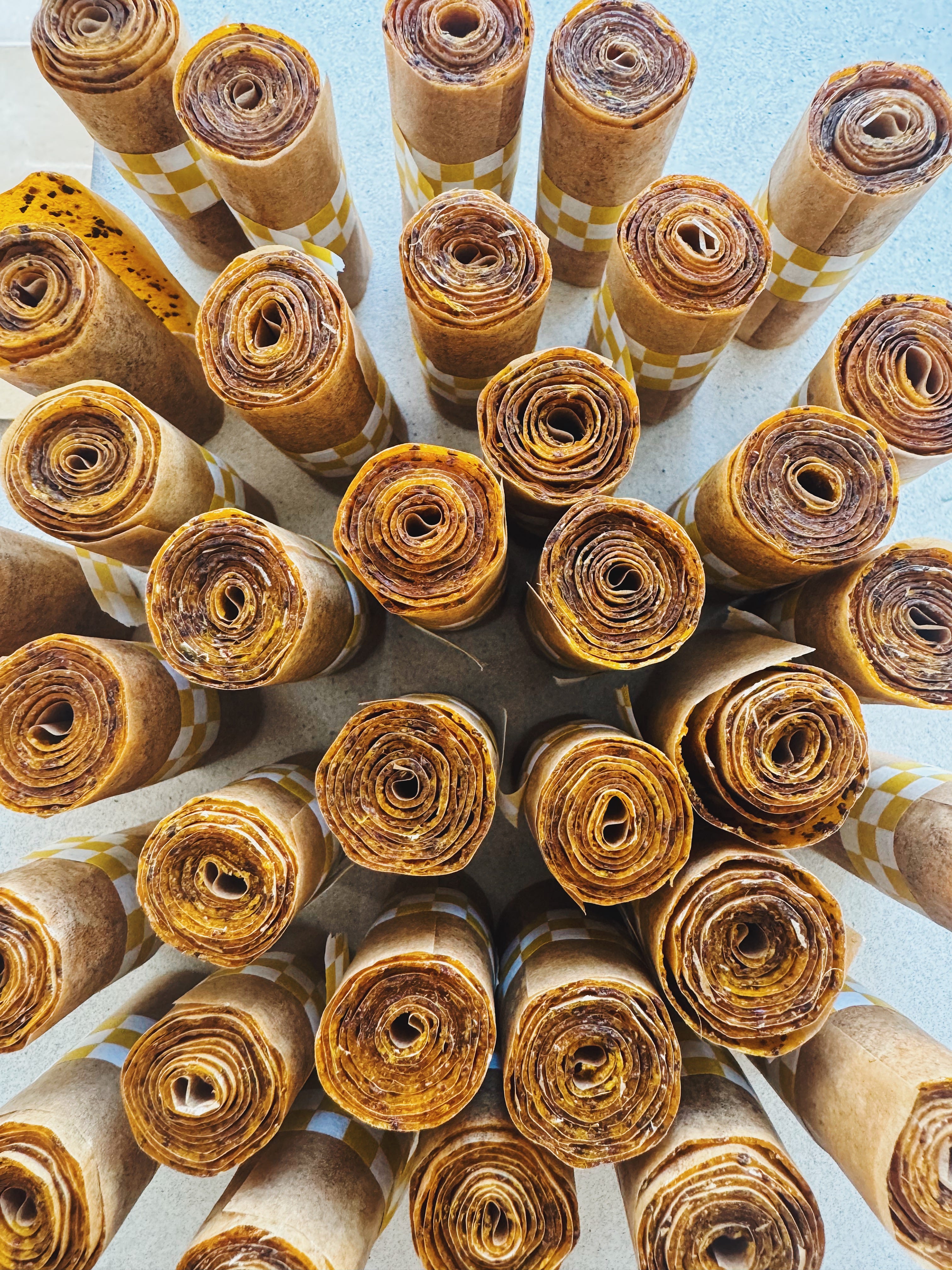
The kids loved the new subtropical scrolls, their new friends loved them, and once again, we couldn’t make enough of them. In a world plagued by conflict and so much darkness, seeing the joy in kids’ faces and hearing some variation of the sounds “Yummmm” as they tasted them for the first time filled us with the confident certainty that, however small the scale, each tiny scroll we made was a net positive for this world.
So we made more. We experimented with the bright, bold flavors of the fruits of the jungle and leaned into the process of making them.
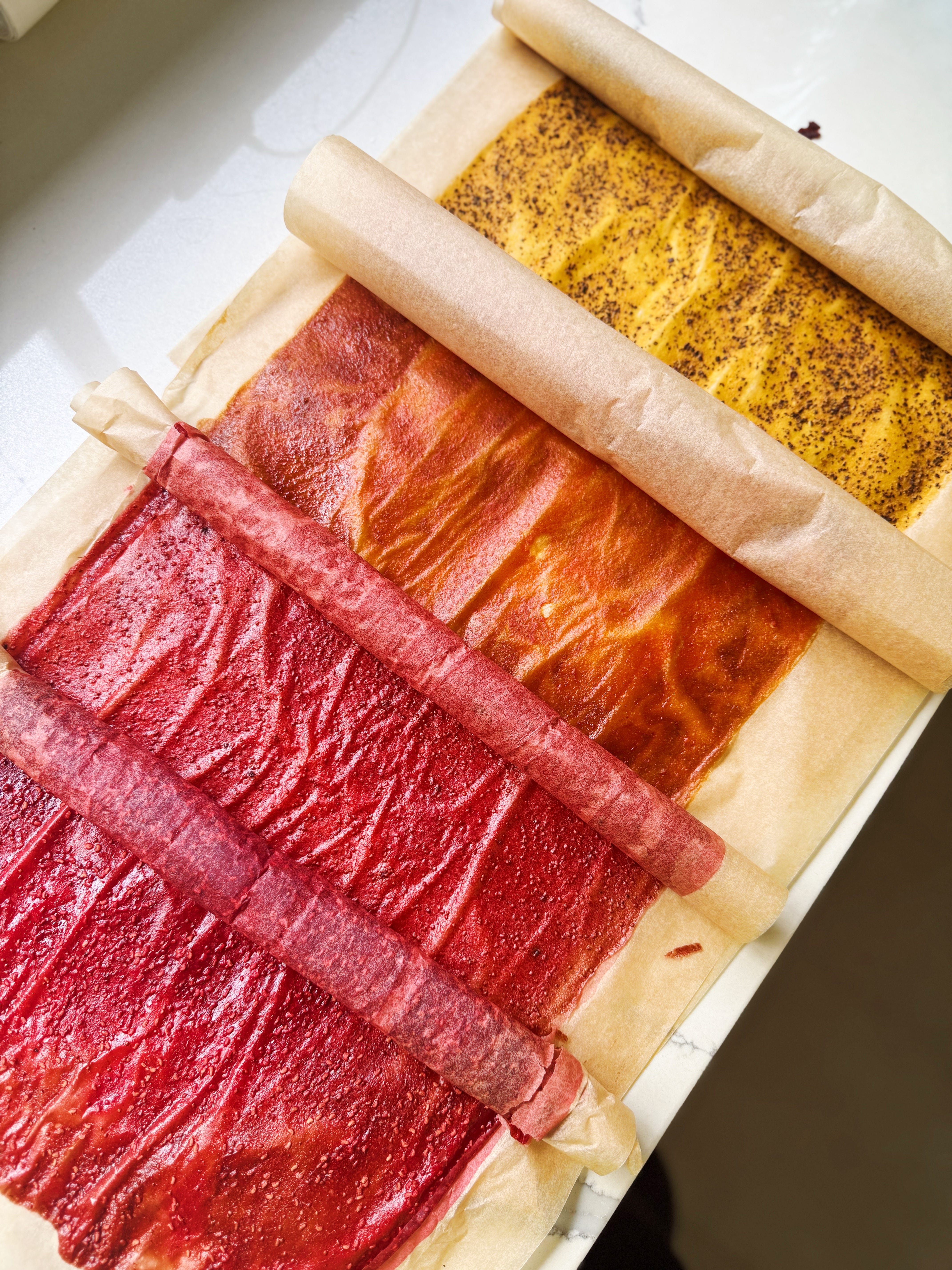
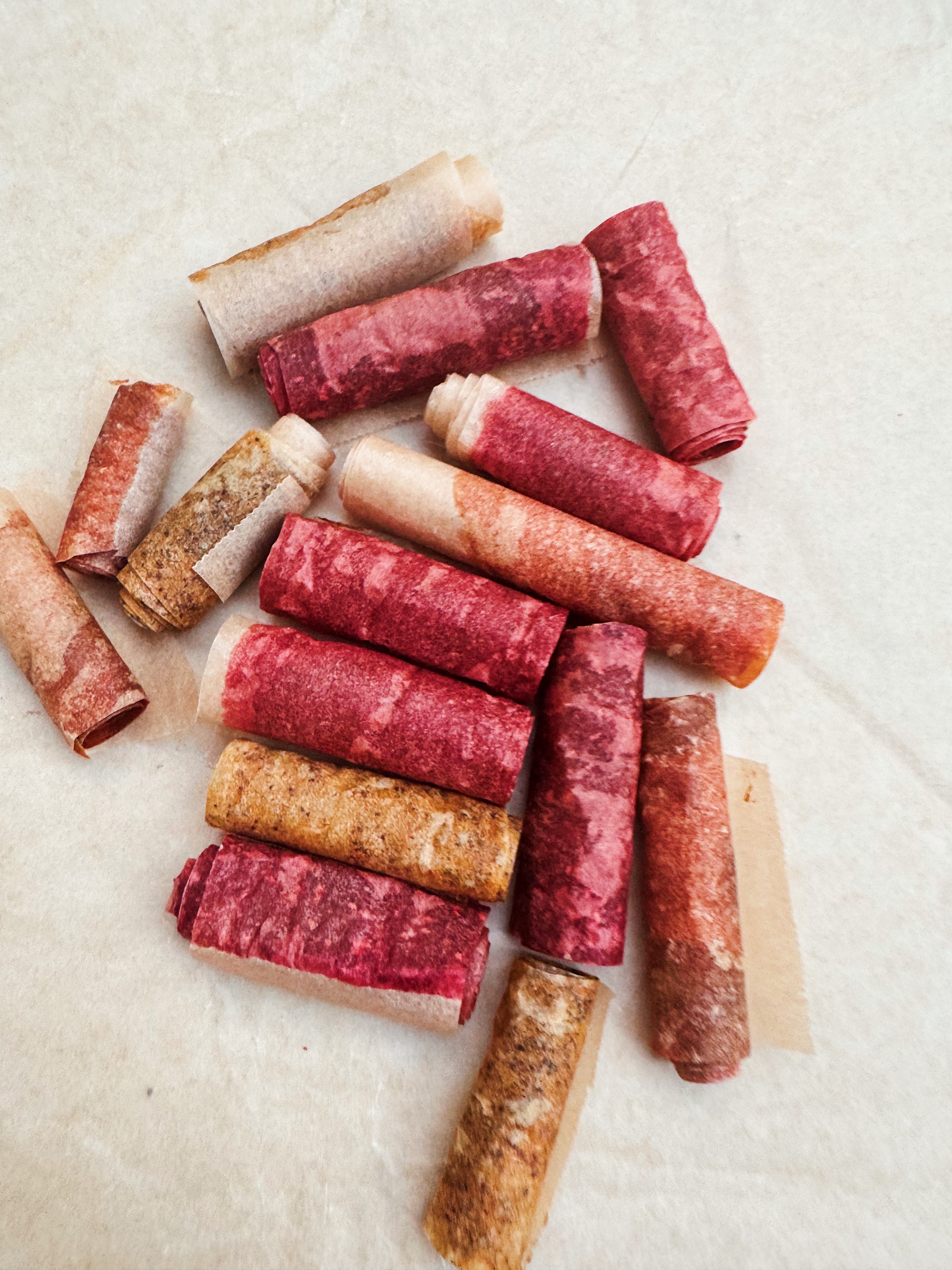
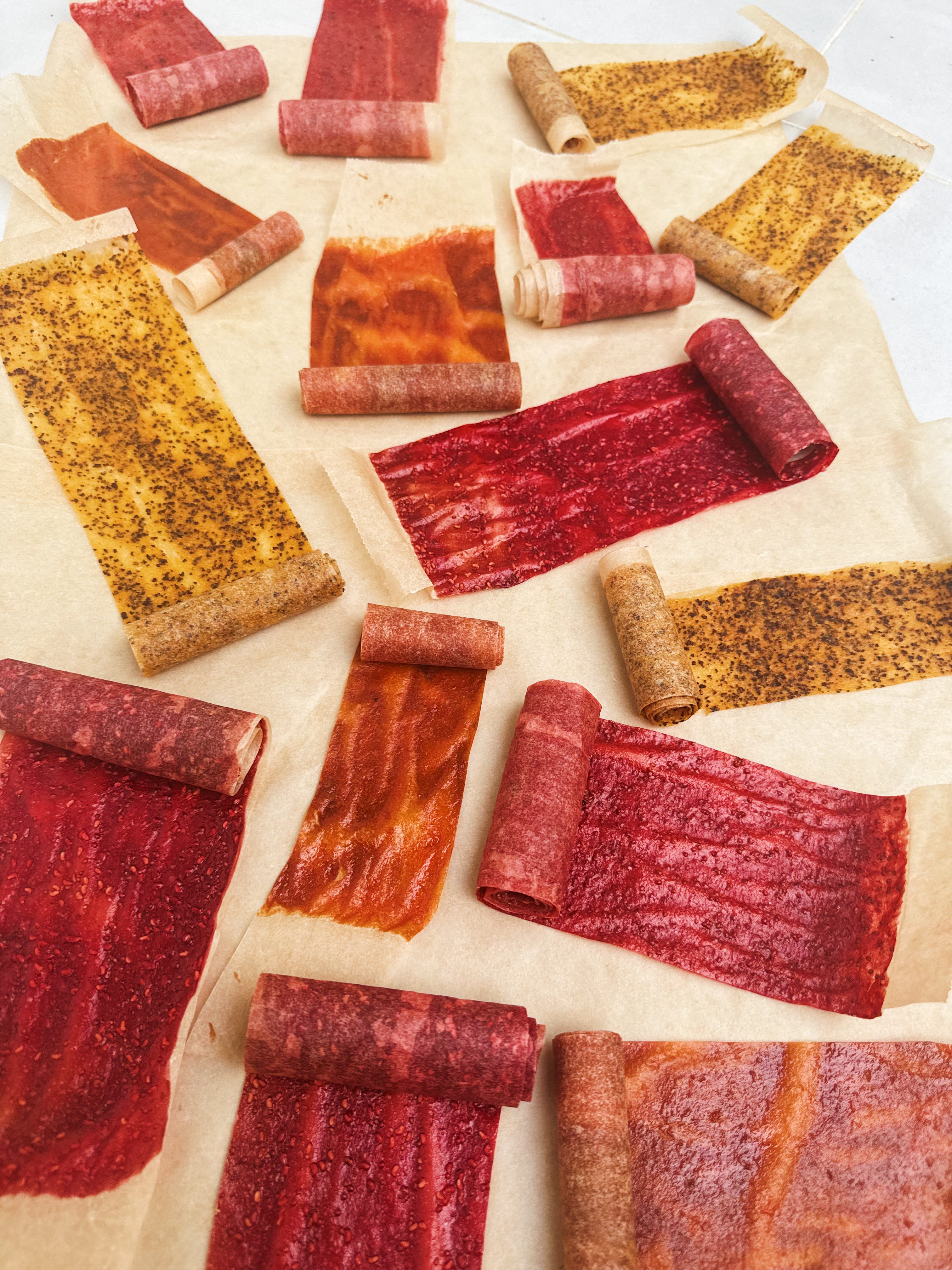
By performing this simple act daily, we found a new ritual. We replaced doomscrolling with fruit scrolling. And in the process of making this sensory treat with our hands, we stopped ruminating, emptied our minds, and welcomed in a sense of ease and playfulness. It was as if we had invented a new love language that required no words or sounds.
In this perch high above the Pacific Ocean, surrounded by rainforest, we found a sense of serenity and calmness that we hadn’t felt for a decade. And when we slept peacefully, with the windows open, the universe whispered to us an answer we were not seeking, as if by magic.
Keep making these. This was the message.
Somehow. Some way. We needed to keep making them. To share the love with more kids. To bring more deliciousness to daily life. To spread the seeds of life and health to all corners of the globe.
Was this a hobby or a business? We weren’t really sure. We’re still not sure. But the more we learned about how widespread fiber and fruit deficiency is, how it starts so early in life, and is largely ignored, the more inspired we became. What began as a solution for our family became a new mission—to create snacks that help kids feel better while reconnecting them to the natural world.
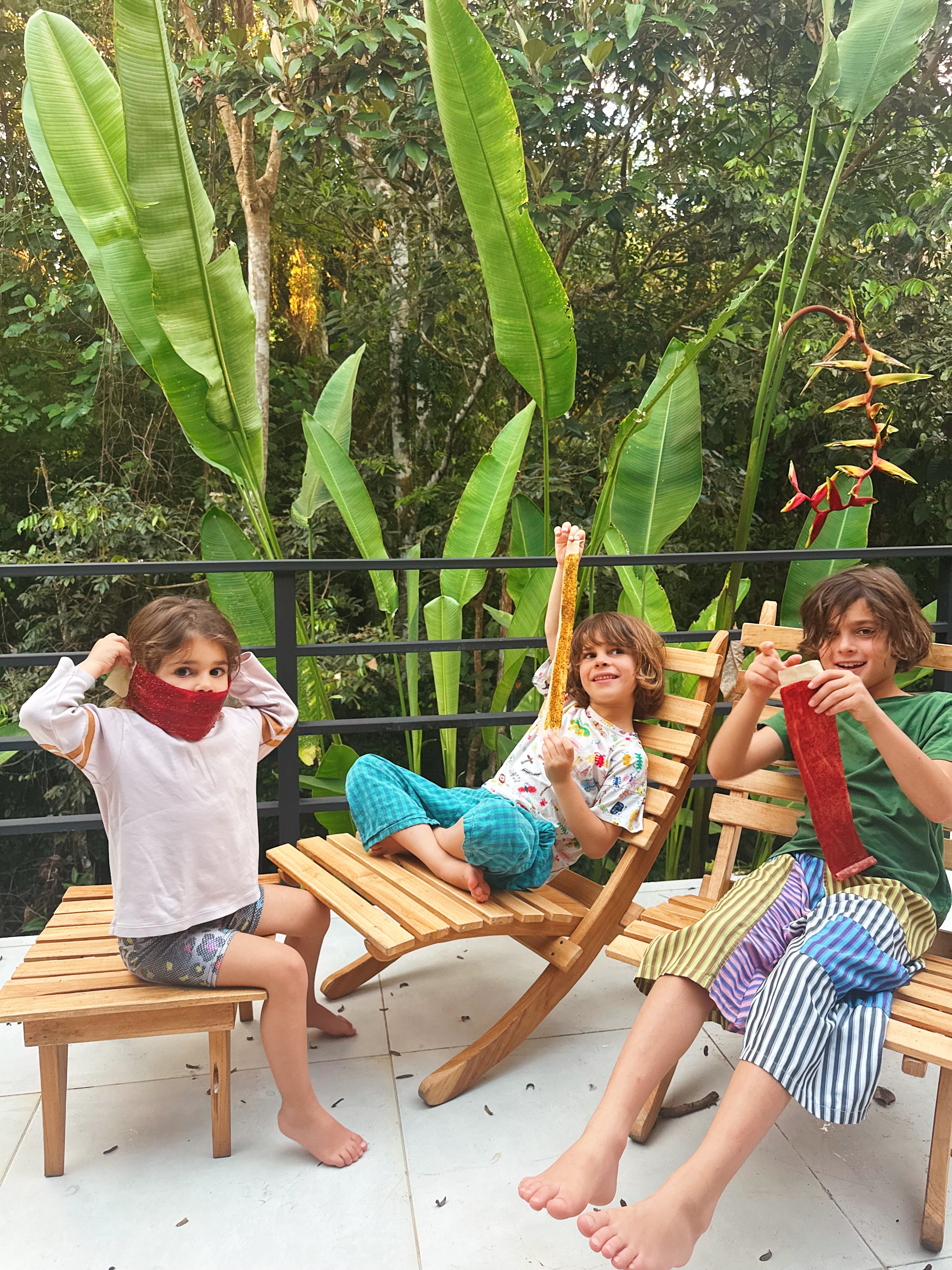
And the irony is that just as we all began to feel so happy and calm in this life in Costa Rica, we realized that this country didn’t have the supply chain and infrastructure we needed to truly give this a shot. This new idea just wouldn’t go away. It kept nagging at us, gnawing at our subconscious, and we knew that if we didn’t give it the attention it deserved, it would likely fly to someone else.
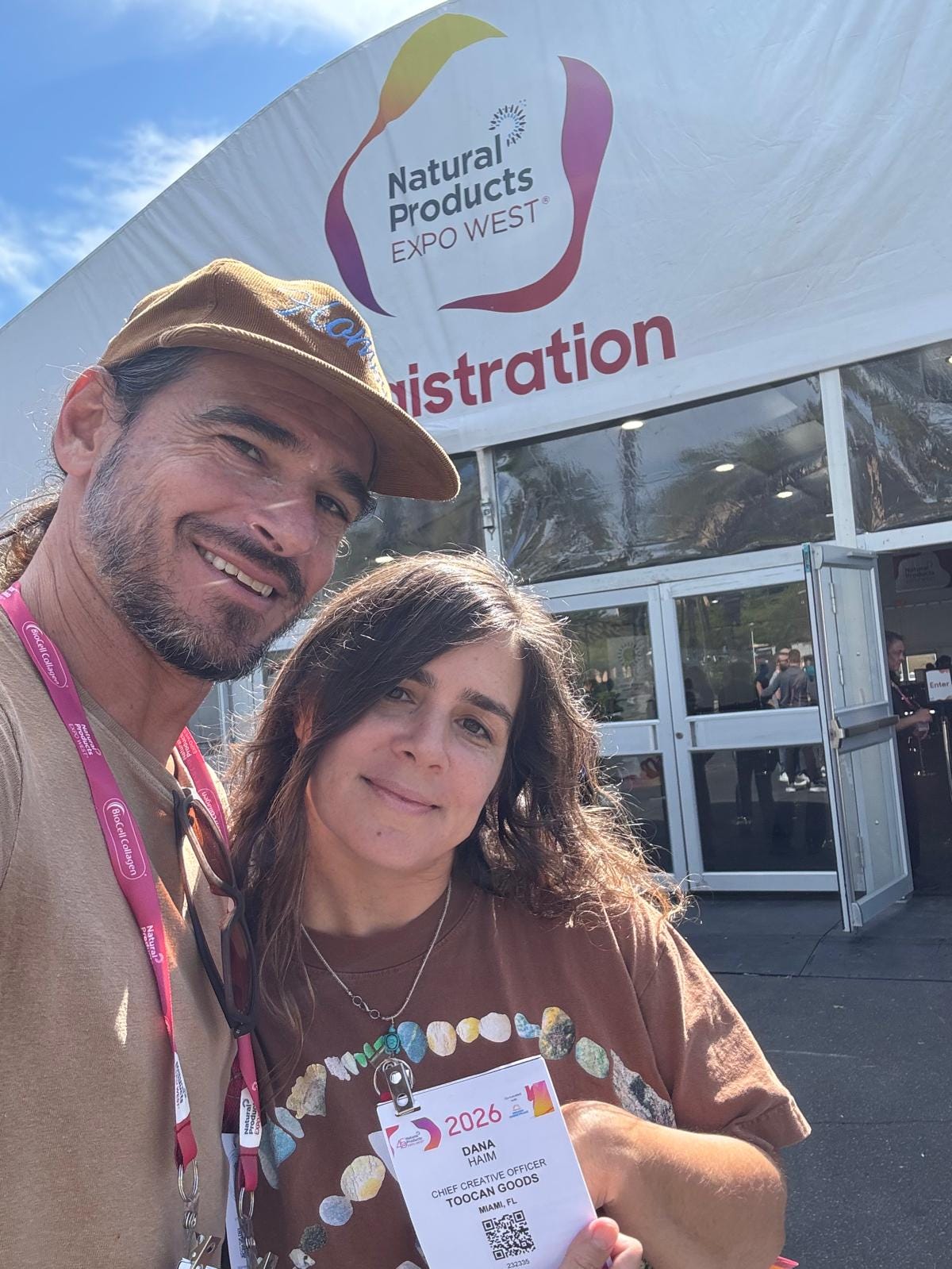
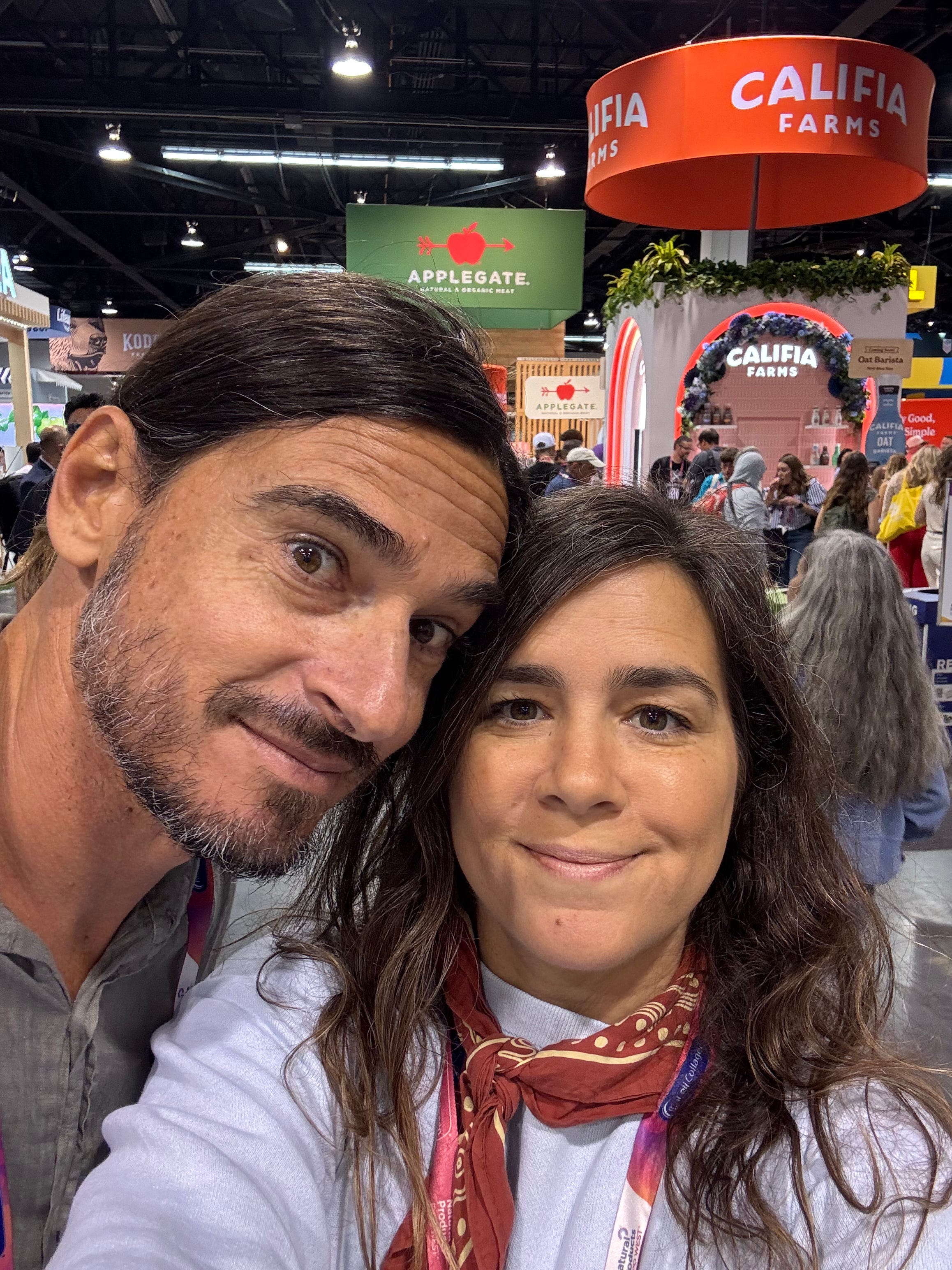
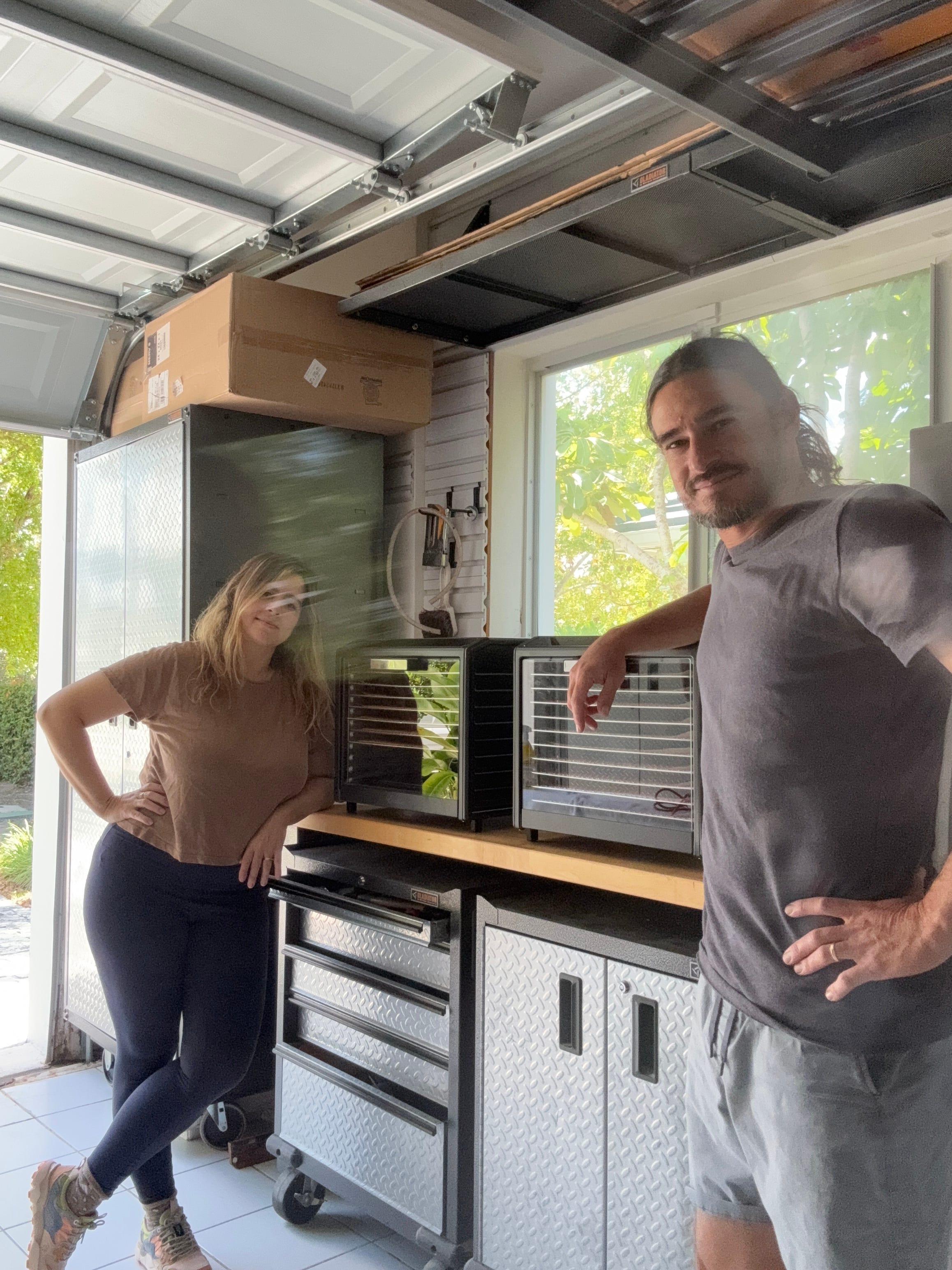
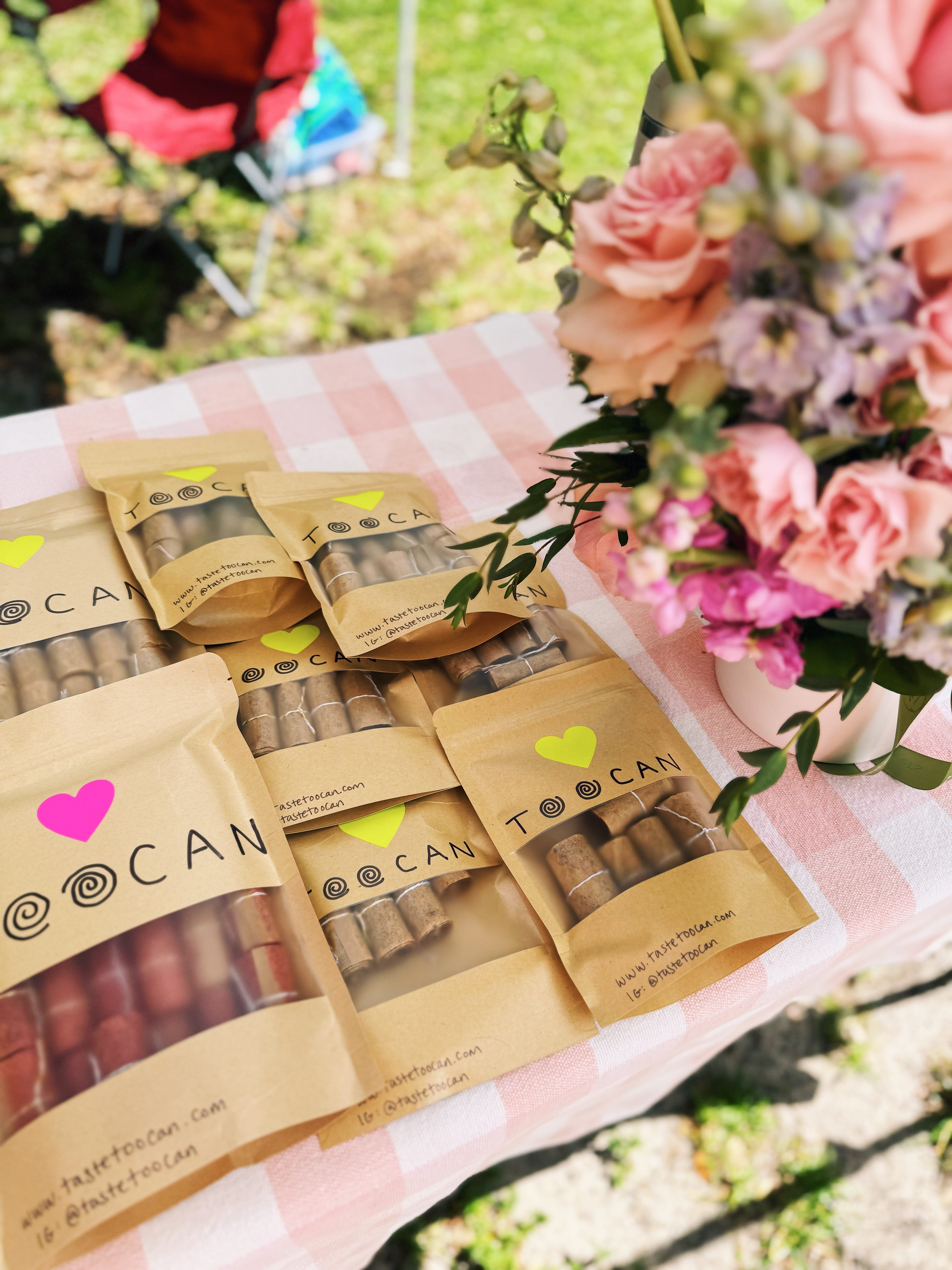
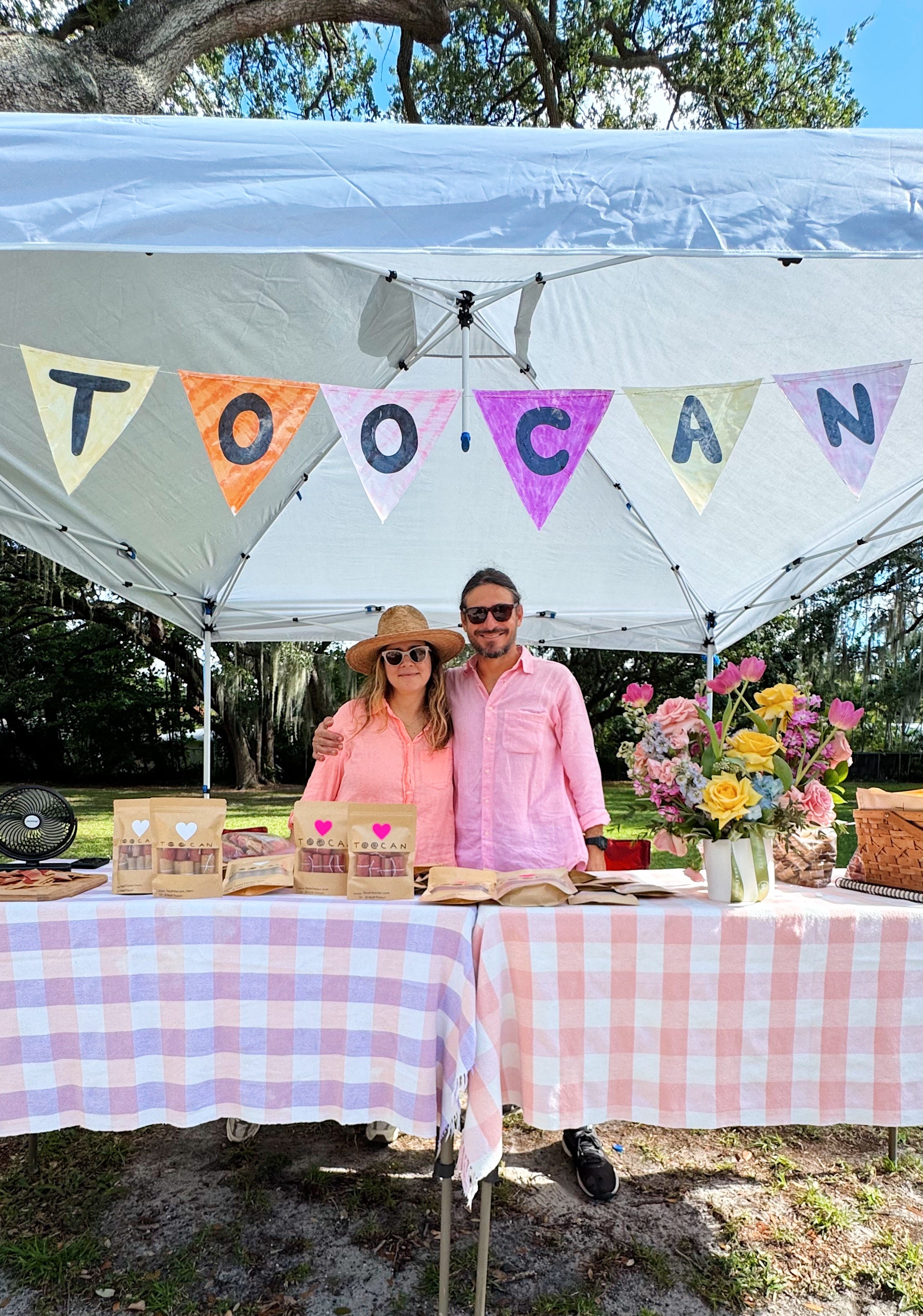
So in March of 2026, we flew back to the USA to attend the large natural foods conference, Expo West, to learn more about this market. The experience validated many of our assumptions, and we are temporarily back in Miami, owners of six new dehydrators, making hundreds of fruit scrolls a day in Dana’s parents’ garage (like every great startup story 😉) while our house is still being rented. We put up a basic website and began selling on WhatsApp groups and to family and friends. Remarkably, the orders—and re-orders—keep coming in.
We chose the name Toocan not only because these noisy birds seemed like the most vociferous advocates for us starting this new project, but also for deeper reasons that align with our family mission. Toucans symbolize a healthy rainforest and ecosystem. They use those long, colorful, pointy beaks to break open fruits and nuts. They are nature’s most effective germinators of new wild forest, spreading seeds to make new life on the forest floor. We like the playful spelling as a reminder to have fun and, no matter how dire the circumstances, to remain optimistic.
These past nine months have been a brazen, death-defying tightrope walk into the unknown, with our incredibly courageous—not so little anymore—children in tow. What we’ve learned is that nothing actually happens if you fall off the rope briefly, as long as you get back up. Nothing happens if only three people “like” your posts, and two of them are your blood relatives. Nothing happens if you don’t know exactly where you are going.
There’s a single strand of rope in front of you, and your main objective is to walk on it and not worry about where it will lead. And as you walk, you begin to understand that you were never on a single strand of rope, but rather on many ropes woven together, connected to millions of other interconnected ropes in a web that all connect to one another. Like the netting in a children’s playground. Or like when spider monkeys join their limbs together to build a simian bridge for their troop to get from one tree to the next.
Ideas are all strung together and connect to other ideas in this giant creative network that exists in the ether. Trust us that this is not a figment of our imagination. It is real. And anyone who has taken a true creative leap can attest to its existence. Sometimes, smaller ideas lead to bigger ones, and only by pursuing the first one with reckless abandon can you get to the next one.
And just as we were contemplating the bizarre and mysterious origins of creative ideas, guess who we bumped into while fruit shopping at the organic farmers’ market in San José, Costa Rica?
Arguably, the person who has thought and written more deeply and beautifully on this topic than anyone else. Yes, while on our family sabbatical, we bumped right into the author of Eat Pray Love and Big Magic, none other than Elizabeth Gilbert, who was on a parallel sabbatical of her own.
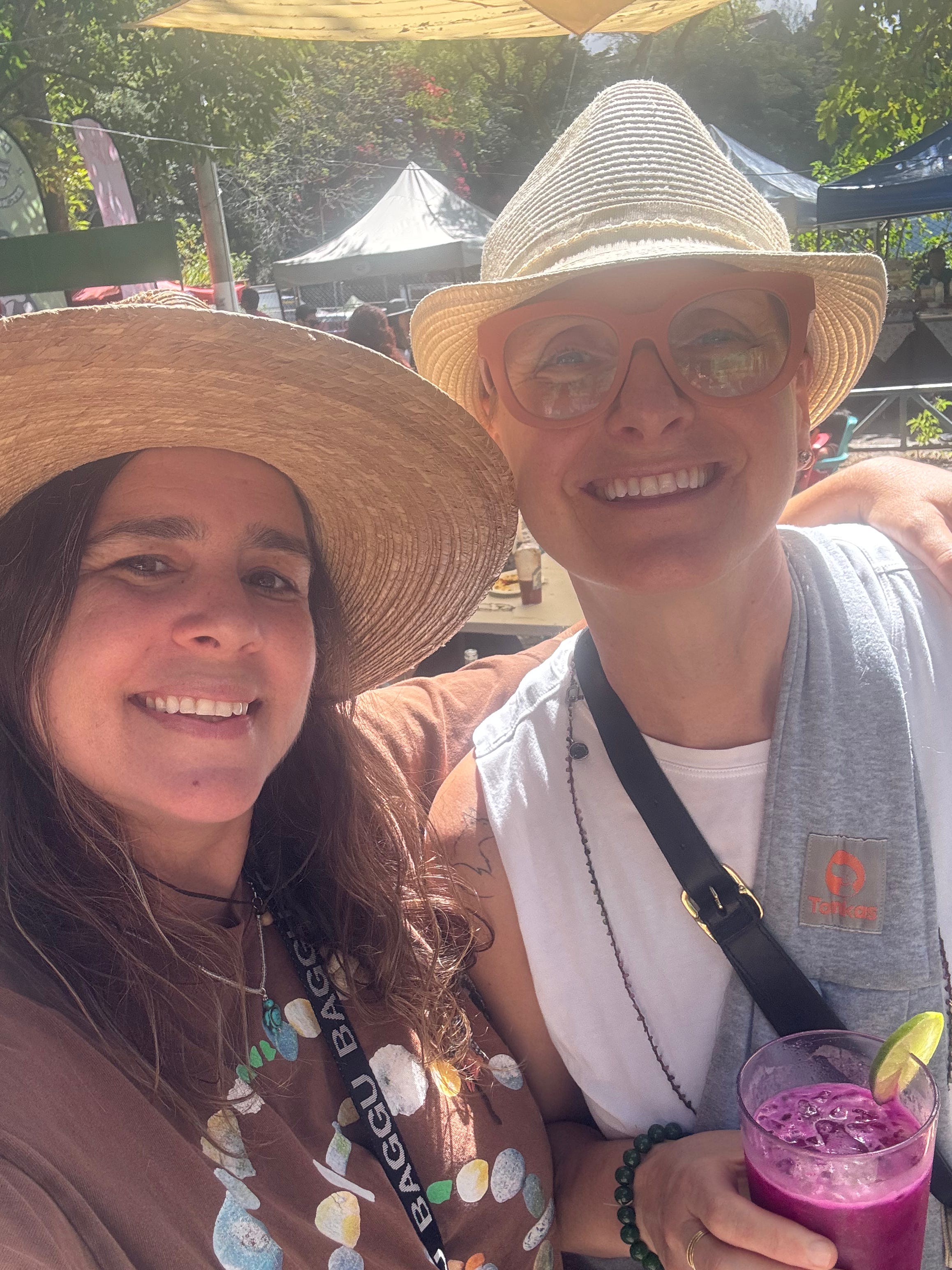
Dana recognized her immediately and courageously said hello. We ended up striking up a long conversation. She gave our kids stickers. And when we told her our story, she called us the “Eat Pray Love family.” We took it as the greatest compliment. Bumping into Liz (because we’re on a nickname basis now) in this random way, at this precise moment of accepting a new idea into our lives, and having this moment with her felt like a spiritual validation stamp that we were on the right path.
Life works in such sneaky, mysterious ways. When you’re laser-focused and heads down, inspiration and serendipity remain bottled up like a stifled genie. But when you are vulnerable and open to possibility, there is a chance you will have a revelation, or meet one of your literary heroes like a shaven-headed genie being released from a bottle.
We went looking for threatened wildlife. In many cases, we found it. But really, what we found accidentally was an expanded, amplified mission. A much larger set of connective tissue. Another creative playground to explore and marvel in.
When we left on our road trip, it felt like a goodbye to our life in Miami. Did we ever expect to be back 9 months later, working in the food industry, manufacturing a new fruit snack in our garage, and then slinging it at our local farmers’ market while wearing matching pink linen shirts? No. This was definitely not on our bingo card for this year.
Are we feeling it? Yes, wholeheartedly.
It reminds us of the ancient Zen proverb: “When the student is ready, the teacher will appear.”
And so, what is happening with Earth Parade, you may be wondering?
Well, we are happy to report that the parade must go on.
We will continue seeking opportunities to discover rare creatures, here and everywhere. We hope to eventually document 73 threatened species in the wild—we’re about 25% of the way there. We also have a backlog of stories from our time in Costa Rica still to share, along with guides we hope to release from Alaska and Costa Rica. We are removing the paywall on all the guides and stories so everyone can enjoy them freely. Subscriptions will be totally voluntary.
Earth Parade is melding into, blending with, and supporting Toocan—and vice versa. They both serve the same mission, and each will continue in their own way, at their own cadence. We will keep learning about and advocating for wildlife and the natural world. We don’t need to travel full-time or stop fruit scrolling in order to do that.
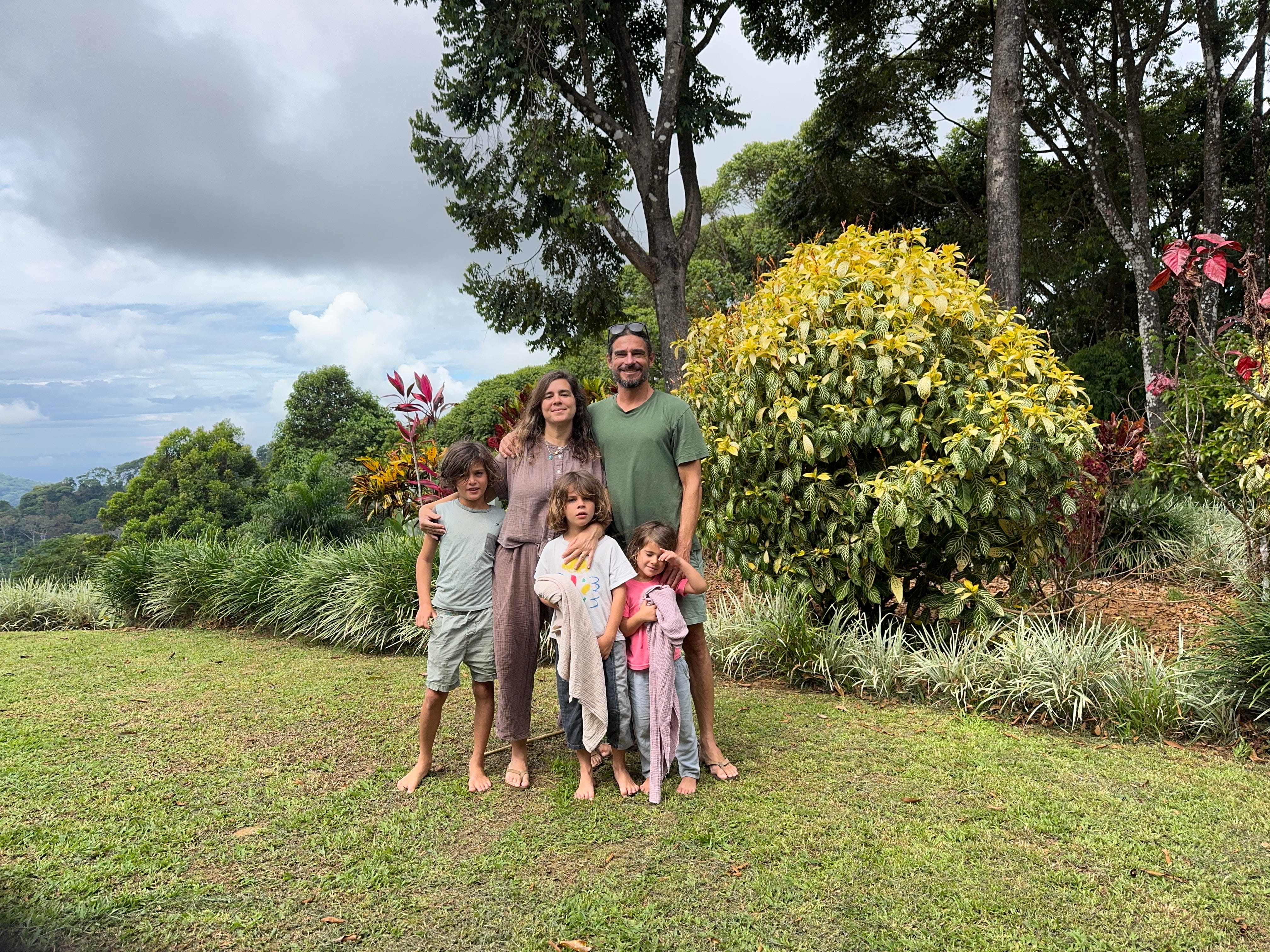
As ever, we are so grateful for your support. Thank you for being here with us and for walking a little bit of this path alongside us.
PS. And for those of you still here, we know the real reason you’ve read this far into the post. We’re so on to you! For all of you in the USA or Canada who want to get a first taste of our new snack, please check out our new website and feel free to use the discount code TASTETOOCAN15 at checkout. And please follow us on Instagram @tastetoocan.
PPS. And for those hardcore wildlife heads among us, who need to hear what it sounded like outside our Airbnb in the rainforest at the exact moment we decided to start our snack company, we leave you two videos. The first one is the yipping of the yellow-throated toucan. The one below is our daughter imitating the yipping of the yellow-throated toucan. Enjoy!
What a beautiful journey .. I am so hooked on these rollup! They are yummy for your tummy ! Gotta make the guanabana ones .. must be deliciosososos! 👏👏👏👏👏⭐️⭐️⭐️
In case anyone in the digital world is wondering, I can verify that these are an awful idea to buy because your entire family will become obsessed with them 😛